« Return to Bear Baiting Karaoke file
The Bear Takes to the Street
File class: LICENSED PREMISES / STREET OPERATIONS / COMMUNITY WATCH
| Approx. date range | Late 1970s–1990s, with later sightings |
|---|---|
| Primary locations | Licensed-premises boundaries, garage courts, Marine Parade and town-centre pavements |
| File status | DORMANT / AUTHORITY UNCONFIRMED |
BARRING REGISTER | KARAOKE RECORDINGS | CCTV SPOTTED ANTICS | BURSTIN FILE | BURSTIN CABARET
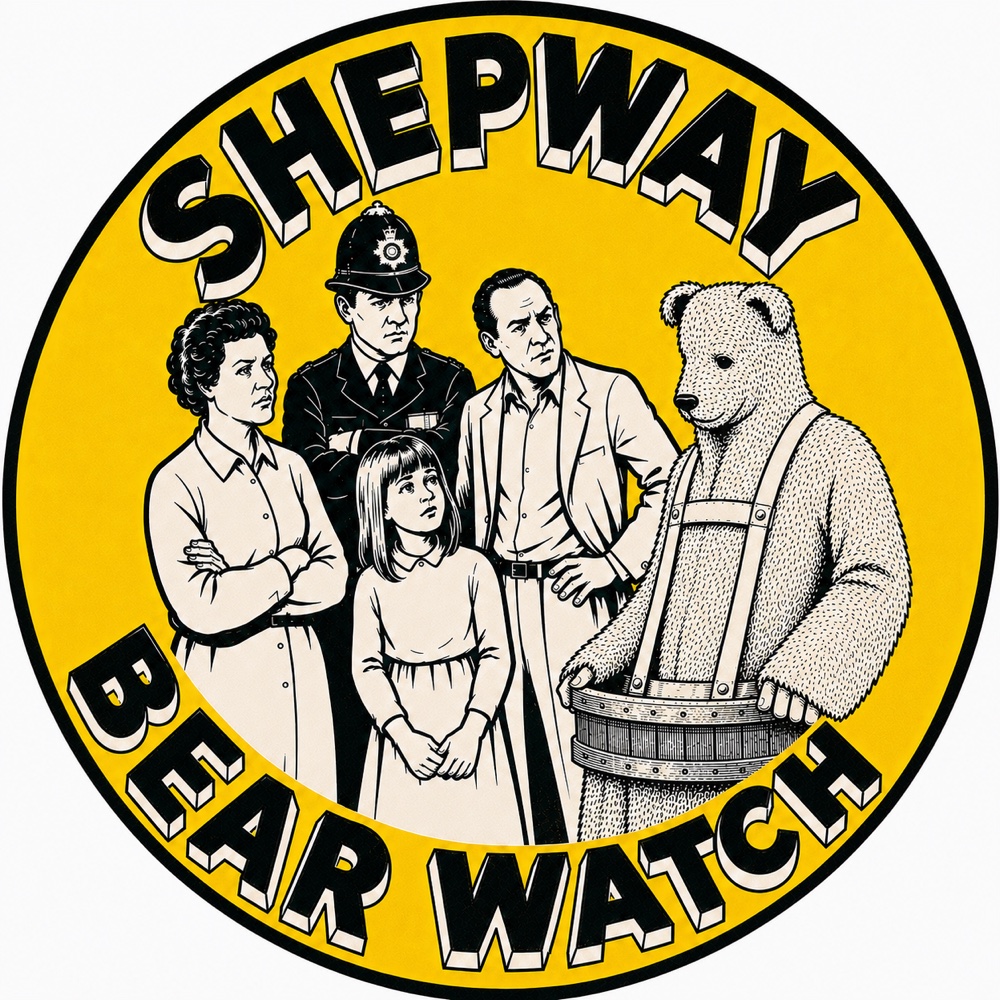
The scheme is variously described as a Pubwatch subcommittee, a community reassurance group, a festival stewarding network and a collection of annoyed landlords. Its signs turn up at licensed premises, lock-ups, yards and workshops. Whether the Watch shared formal notices or merely passed them around remains unresolved.
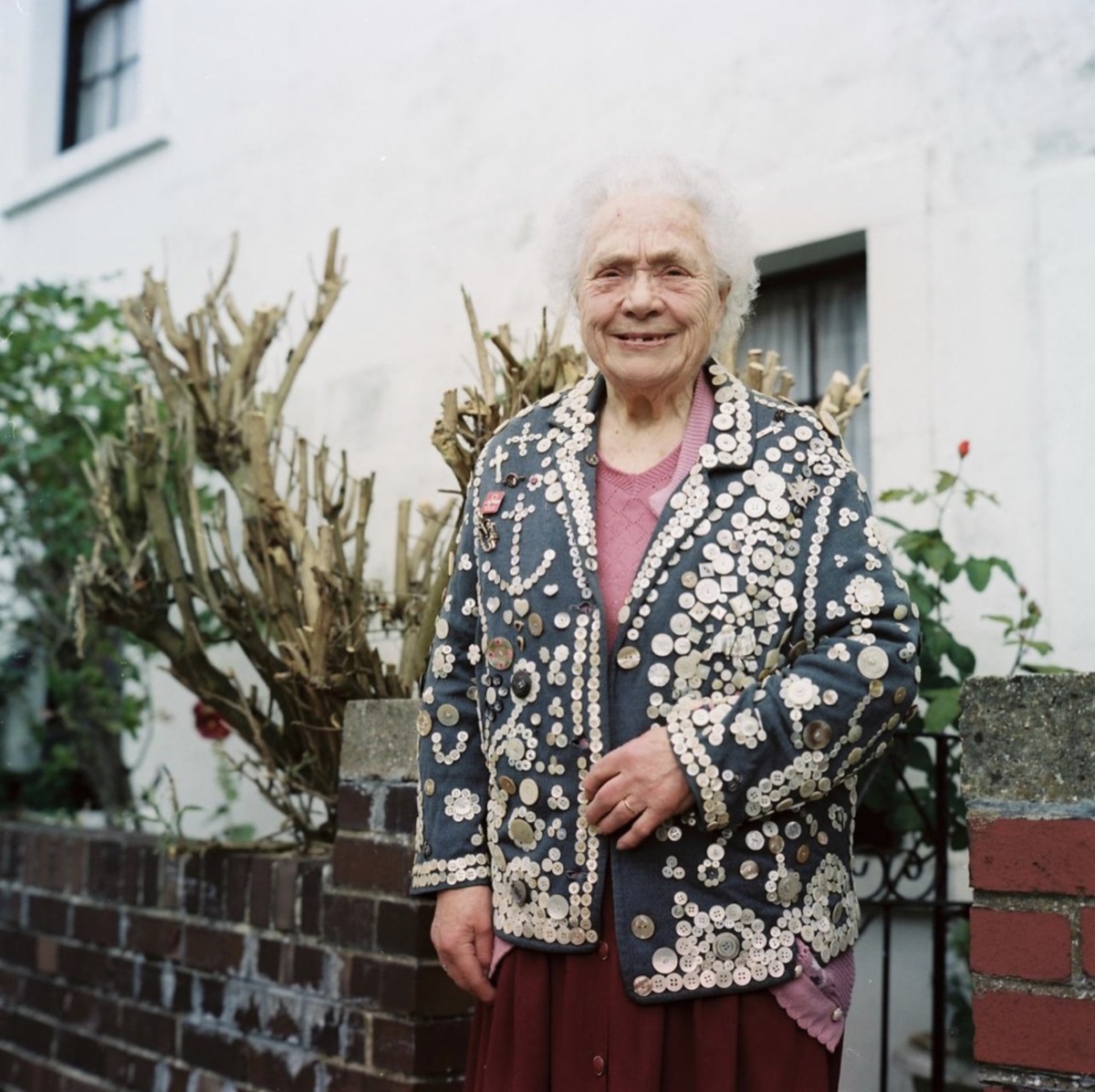
The association material names Wynne Vale, Pearly Pride of Hythe, as its chair. Her surviving portrait is filed without minutes, membership figures or a clear explanation of how a small community watch acquired such a durable badge.
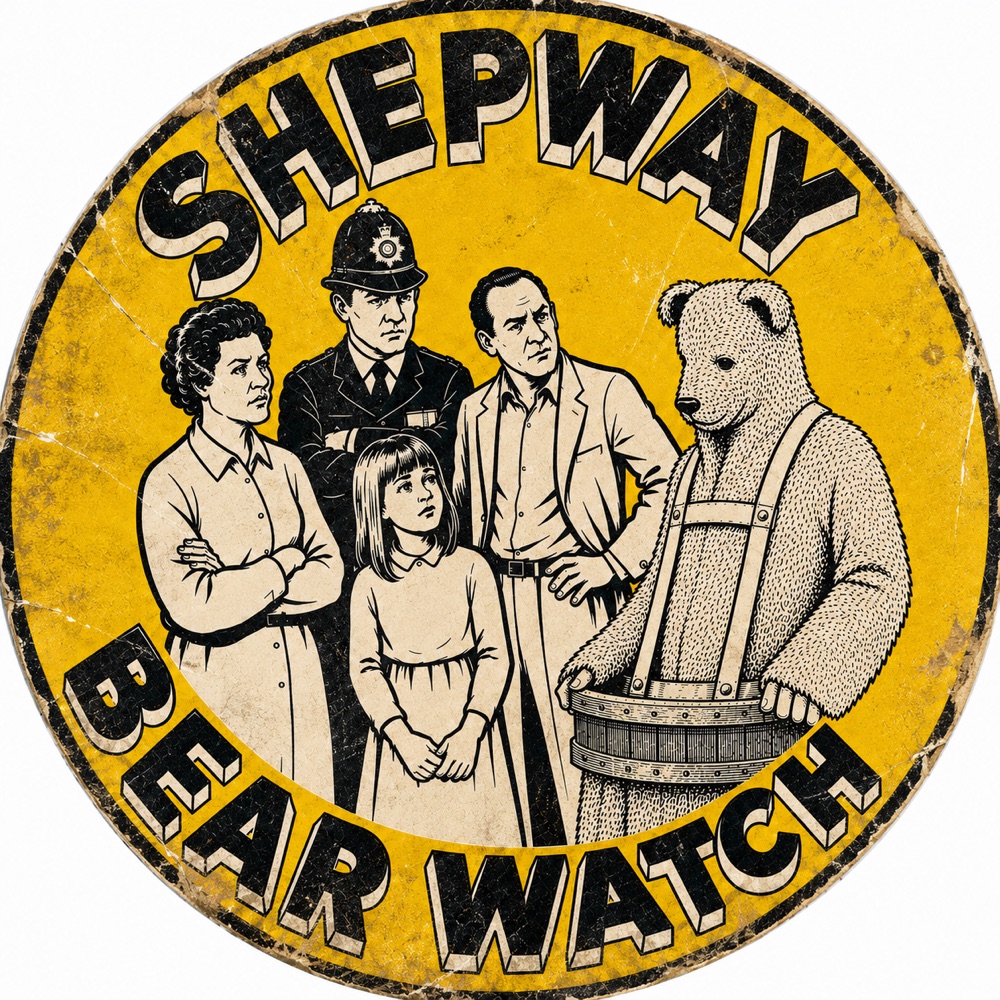
Shepway Bear Watch appears to have developed after exclusion notices began circulating between a number of licensed premises. The Bear had once been tolerated as a local novelty, festival caller and karaoke performer. Later files record no confirmed booking, early starts, disputed collections, return after ejection and a tendency to treat the wooden hoop as a reason to occupy an entrance.
Permission to enter was withdrawn by individual venues. The Bear responded by relocating much of the same activity to pavements, garage courts and the public space immediately outside. He maintained that an exclusion notice did not apply beyond the doorway. Participating premises did not accept this reading.
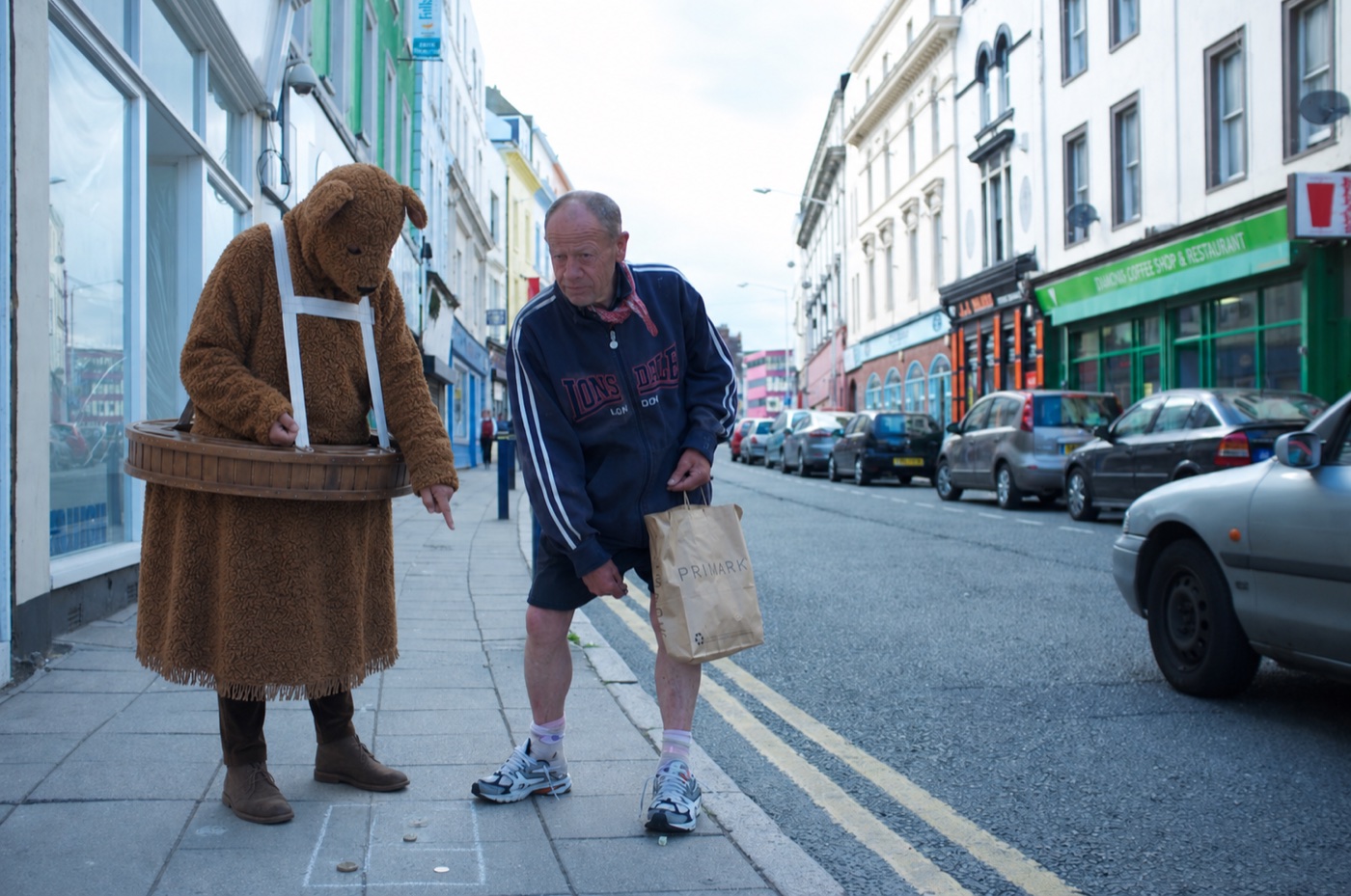
The earliest street-period reports describe chalk grids, a handful of coins, rain-damaged score sheets and song requests arranged on pavements adjoining barred venues. The Bear called these activities pub games continued beyond the licensed boundary. Complaints describe low-stakes street gambling, improvised raffles, bottle-top competitions and quizzes delivered through open windows. No reliable rule sheet has been retained.
Street bingo followed the same pattern. Notices refer to a caller operating from the pavement, no card sales through pub windows, and the recurring argument that a chalk line did not create separate premises. The Bear’s view was that he was working. Most surviving reports describe loitering with equipment.
| File | Location | Report |
|---|---|---|
| BW-07 | Licensed-premises entrance | Bear declined admission. Remained immediately outside and commenced quiz. |
| BW-11 | Pavement | Four chalk squares, seven coins and one disputed rosette recovered. |
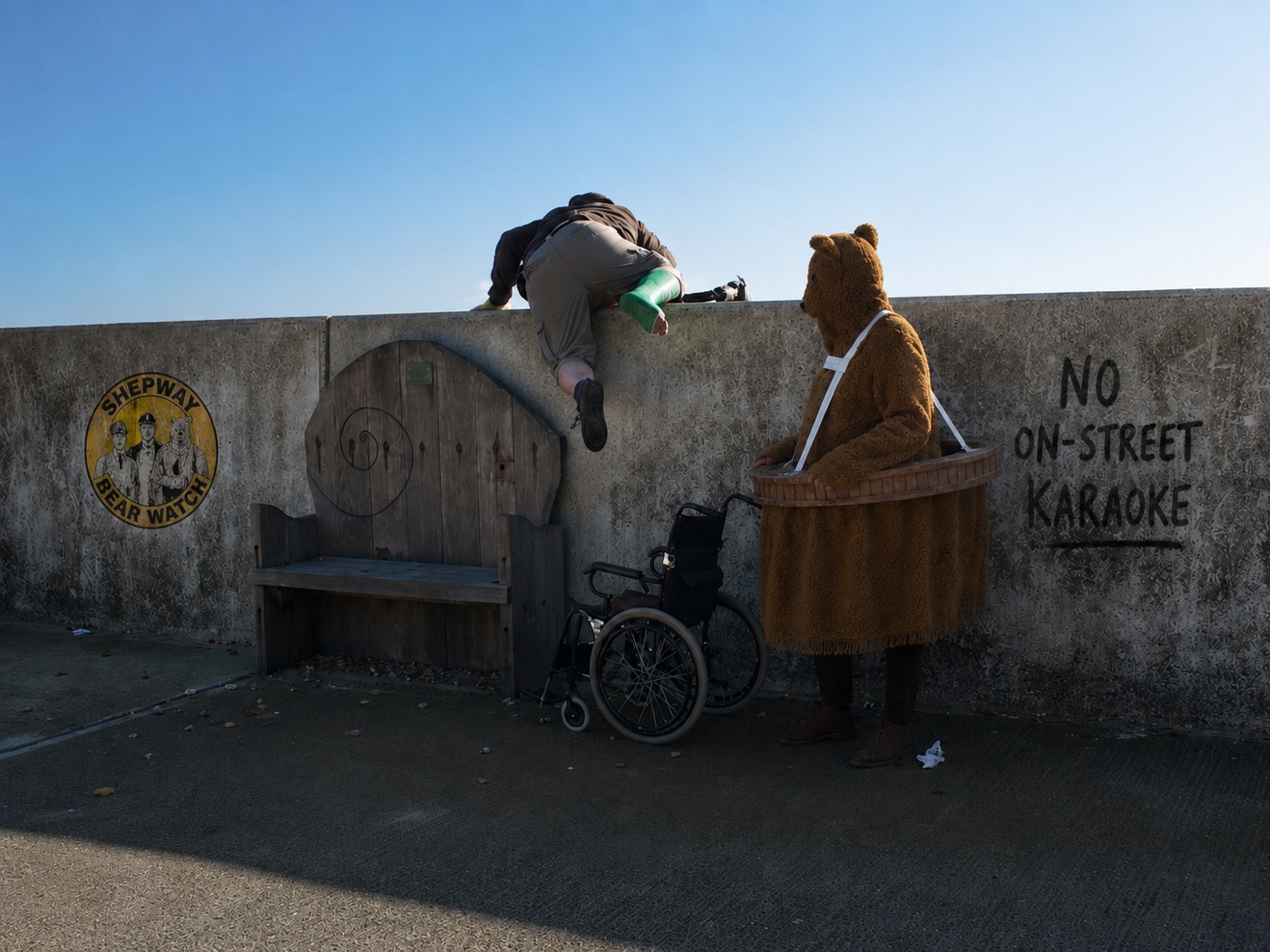
| BW-14 | Garage court | Unamplified singing followed display of a “No On-Street Karaoke” notice. |
| BW-19 | Public bench | Bear described activity as “waiting for the late crowd.” No game in progress at inspection. |
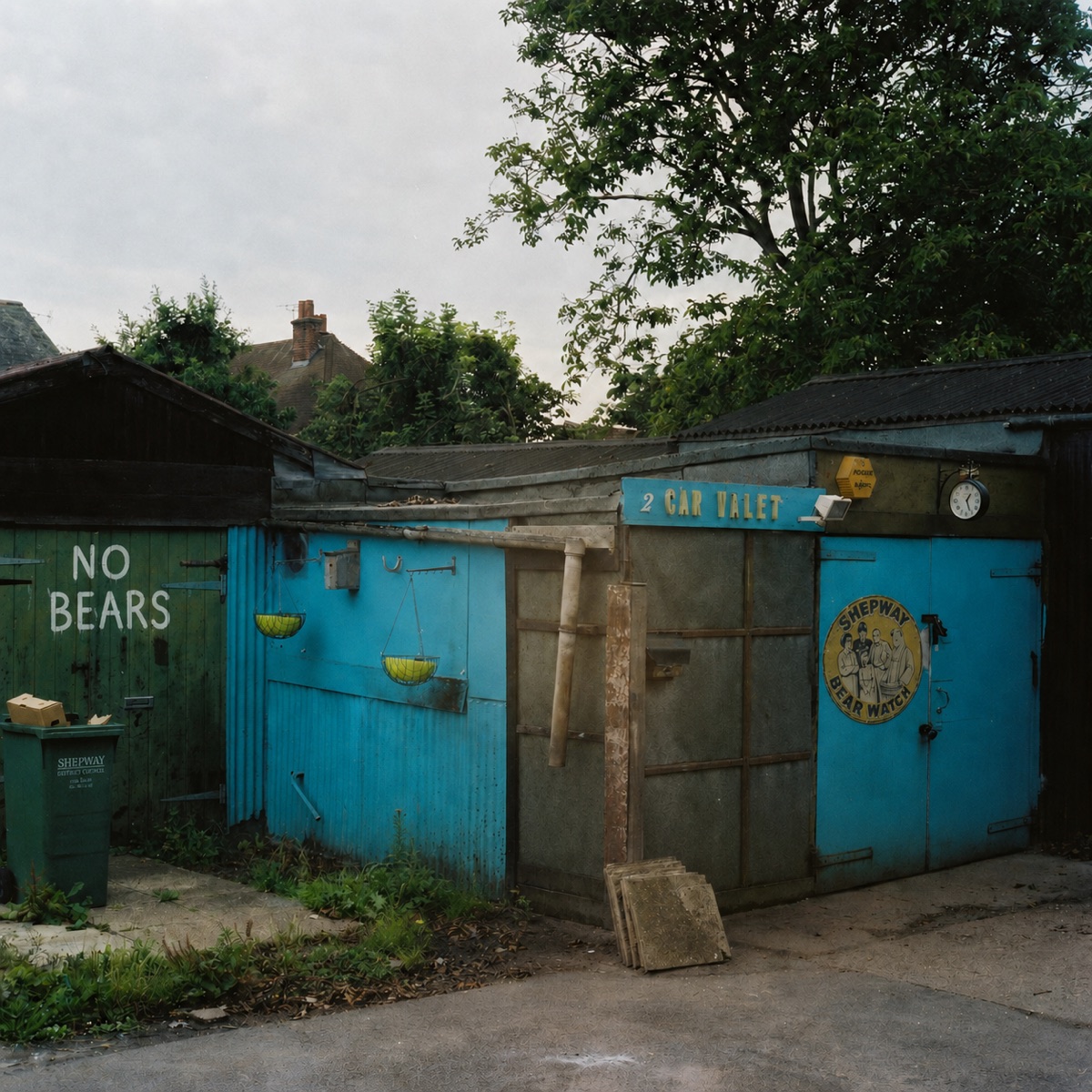
| BW-27 | Private yard | Hand-painted “No Bears” notice installed following repeated attendance. |
| BW-31 | Public-house boundary | Bear maintained that his front paws remained outside participating premises. |
Bear Watch notices spread beyond the pubs into garages, workshops, private lock-ups and small commercial yards. The archive does not establish why such premises became involved. One possibility is that the Bear used side routes as an audience catchment area; another is that he regarded any open forecourt as a possible performance space.
Street karaoke was the most persistent complaint. The Bear positioned himself close enough to retain the pub audience while insisting that he had not re-entered the building. The later hand-painted instruction NO ON-STREET KARAOKE survives as an archive object, not a rule he was willing to observe.
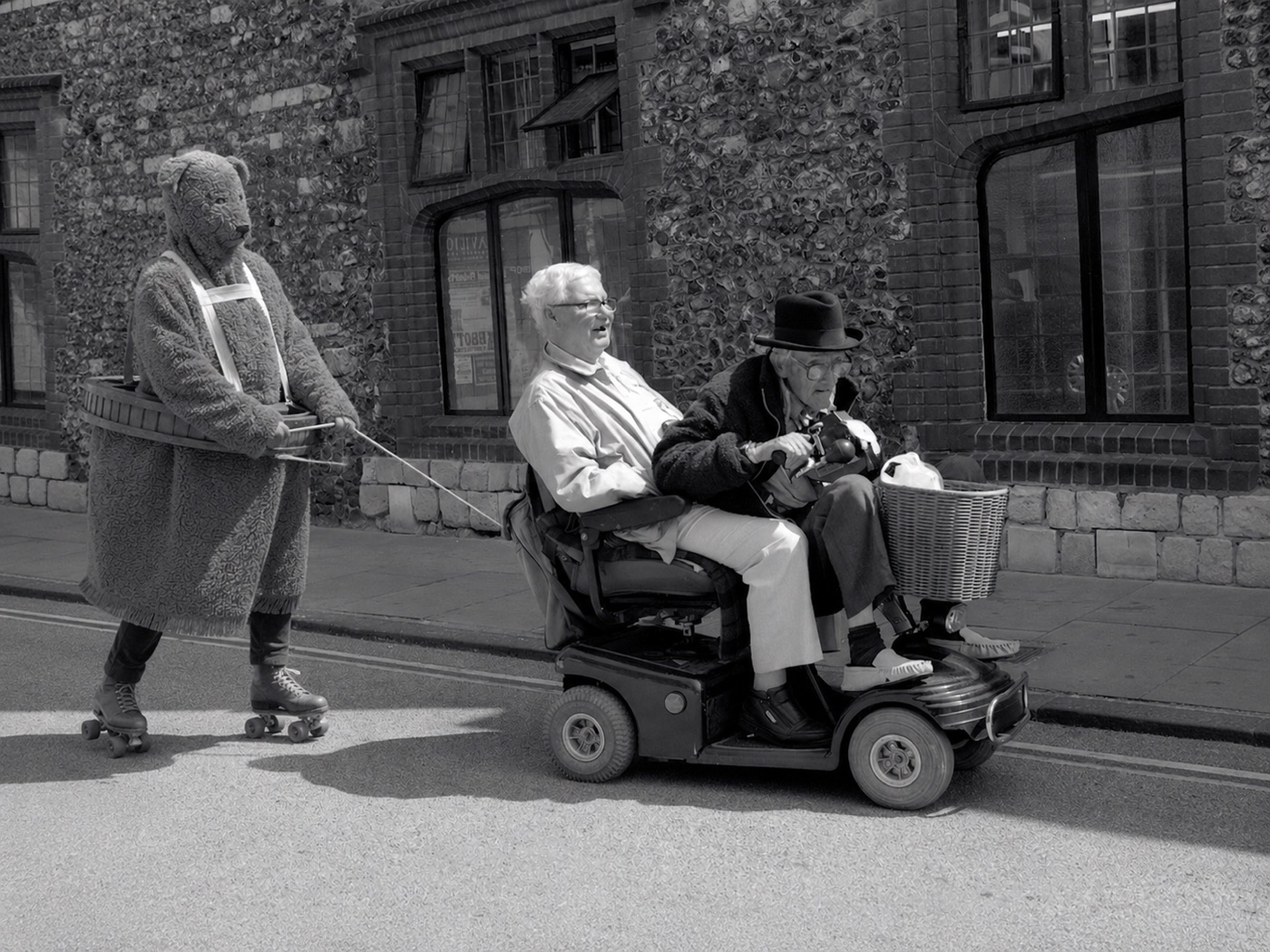
A short-lived later strand links the Bear to a local older-persons’ mobility programme, although no formal approval has been located. Surviving captions describe performance convoys, tow-rope demonstrations, roller-skate attachments and promenade “demonstration heats”. The Bear offered cabaret between stops and expected tea, crisps and biscuits in return.
The programme ended after unsafe towing, unapproved racing language, uncertain insurance arrangements and repeated promenade obstruction. The point of failure was not mobility provision but the Bear’s attempt to turn it into an outdoor entertainment booking.
BEAT THE BEAR KARAOKE |
TONTINE STREET FILE |
RENDEZVOUS STREET FILE
HOTEL BURSTIN |
PRIMA POTTERY / FESTIVAL FILE |
DOME ARCHIVE |
SHORNCLIFFE MASCOTRY
The movement of the Bear's activities from licensed premises into the street did little to resolve the original problem. It did, however, enlarge the area in which the problem could be observed. By the time Shepway Bear Watch signs began appearing on garages, workshops and promenade structures, the distinction between exclusion notice, publicity campaign and local folklore had become increasingly difficult to maintain.