« Folkestone Bear Barring Register
The Bear in Procession — 1950s to 1990s
CARNIVAL FILE | FLOATS / CARNIVAL COURTS / STREET PROCESSION
| Period covered | 1950s–1990s; individual appearances unevenly dated |
|---|---|
| Subject | Folkestone's regular carnival procession and the Bear's appearances within it |
| Brochure file | Holiday Times 1984 / South Kent — Joining in the party fun |
| Related activity | Folk performance, seaside publicity, cabaret and the public-house circuit |
| File status | RECURRING PARTICIPANT |
Folkestone Carnival brought decorated floats, local firms, clubs, bands, carnival courts and spectators into a regular town procession. From the 1950s through to the 1990s, the vehicles and participants changed, but the occasion remained recognisable: entries assembled, the procession came through, and the crowd watched from the pavement.
The Bear's appearances belong within that procession. He turns up among the court, on the dance float, beside a decorated car and among the Folkestone Flyers. Carnival was another part of his public life, alongside the pubs and the seafront entertainments.
He could wave from a float without explaining himself. At the pub door afterwards, the same arrangement was less reliable.
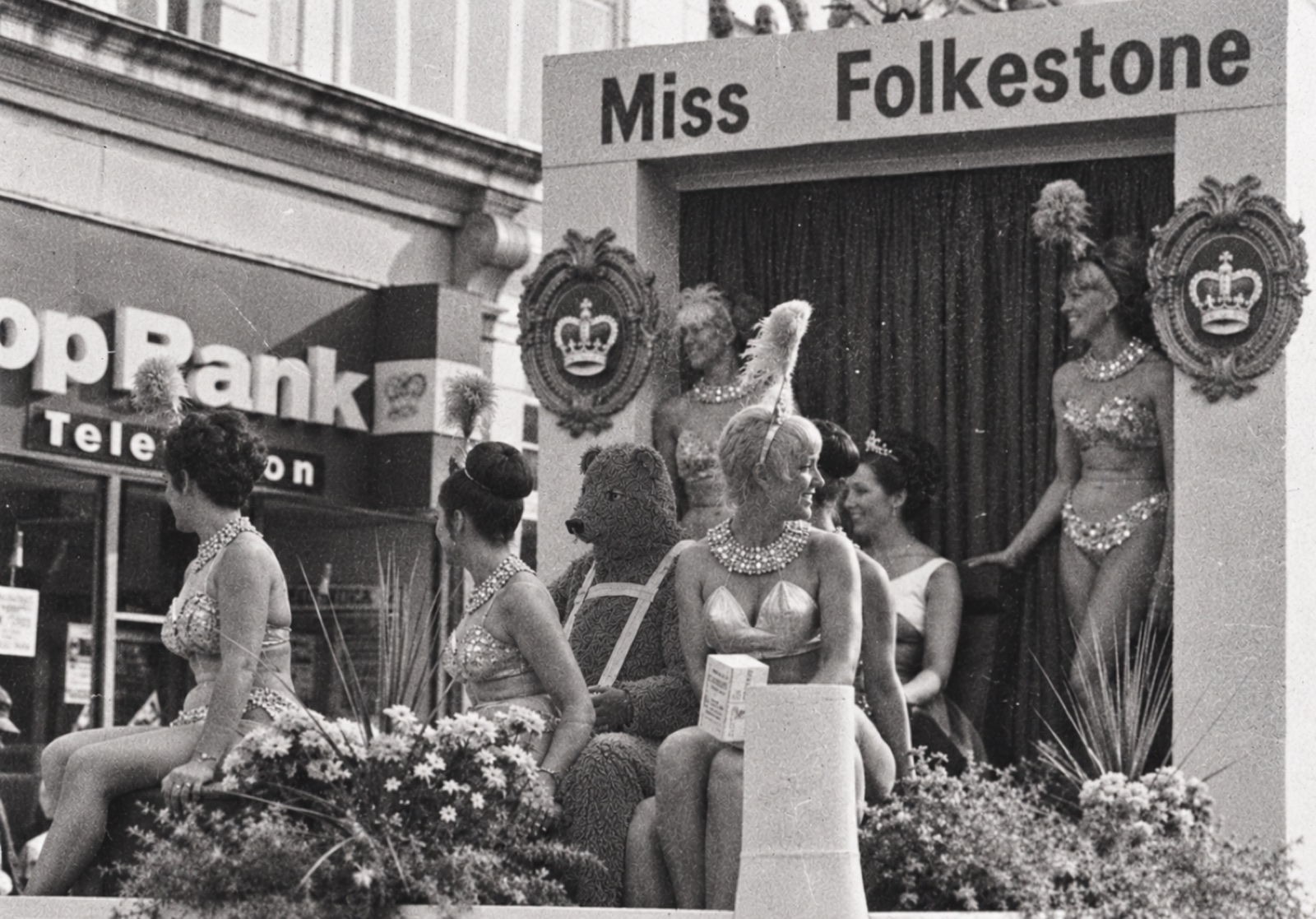
The earlier photographs place local identity on the vehicles themselves. A town name, a company board, a crown or a model castle could turn a working chassis into a public display. Miss Folkestone and her attendants travelled as a court; local firms supplied another kind of presence through the floats they built.
In the Bear's black-and-white Miss Folkestone copy, he has found a seat among the court. The sign identifies the float. His position is less formally described.
| Record | Photograph | Source |
|---|---|---|
| Undated works photograph | A ship-and-castle float marked “Folkestone—Home of Dormobile”, photographed inside the works. | Elaine Hazzel / Folkestone History Group |
| 1968, Dover Carnival | Folkestone's carnival court visiting Dover on a Martin Walter/Dormobile ship-and-castle float. | Paul Wells / Folkestone History Group |
The visiting court connects the Folkestone procession to the wider carnival circuit. The float carried the town's name beyond its own streets; neighbouring courts made the return journey.
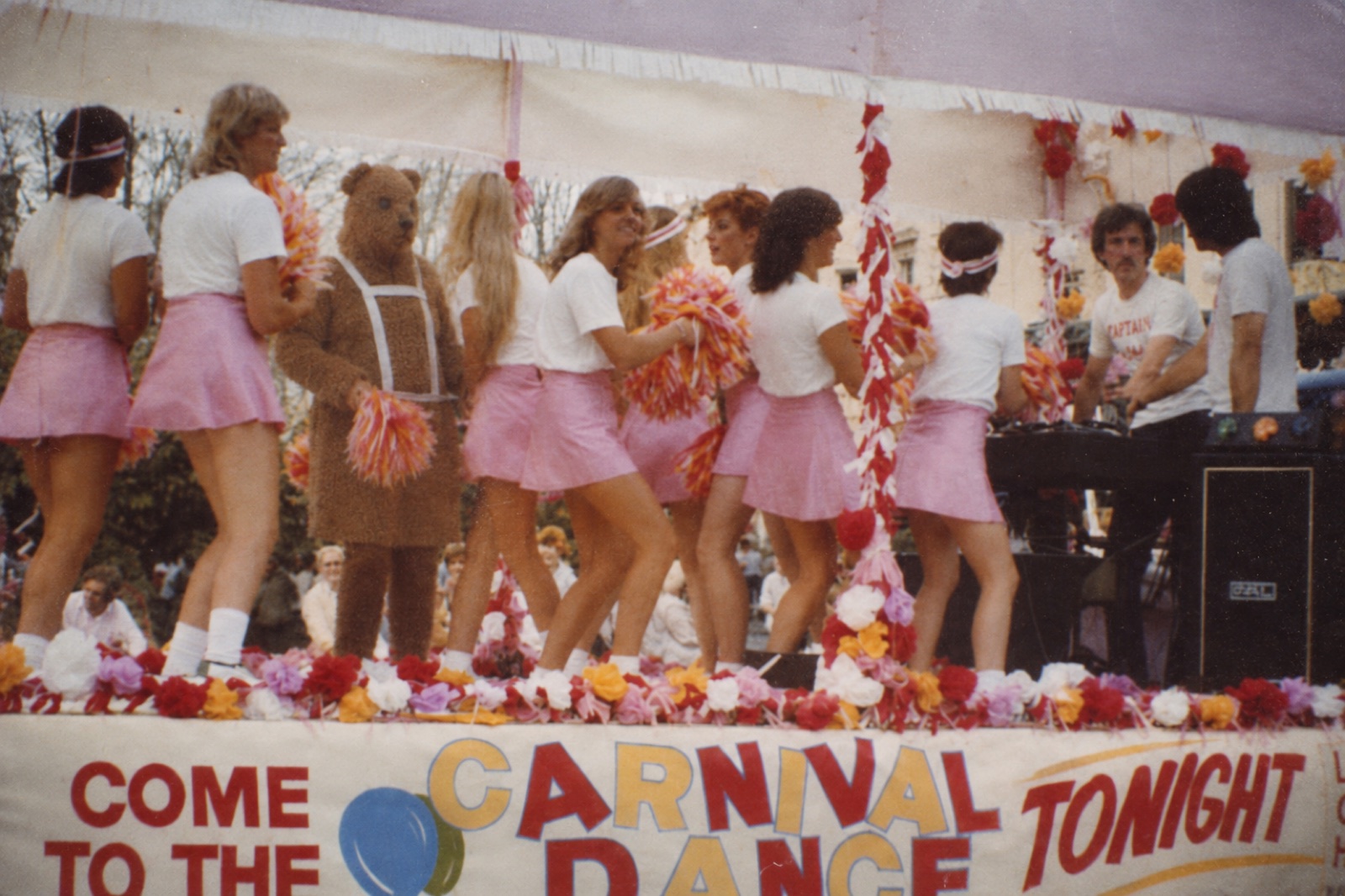
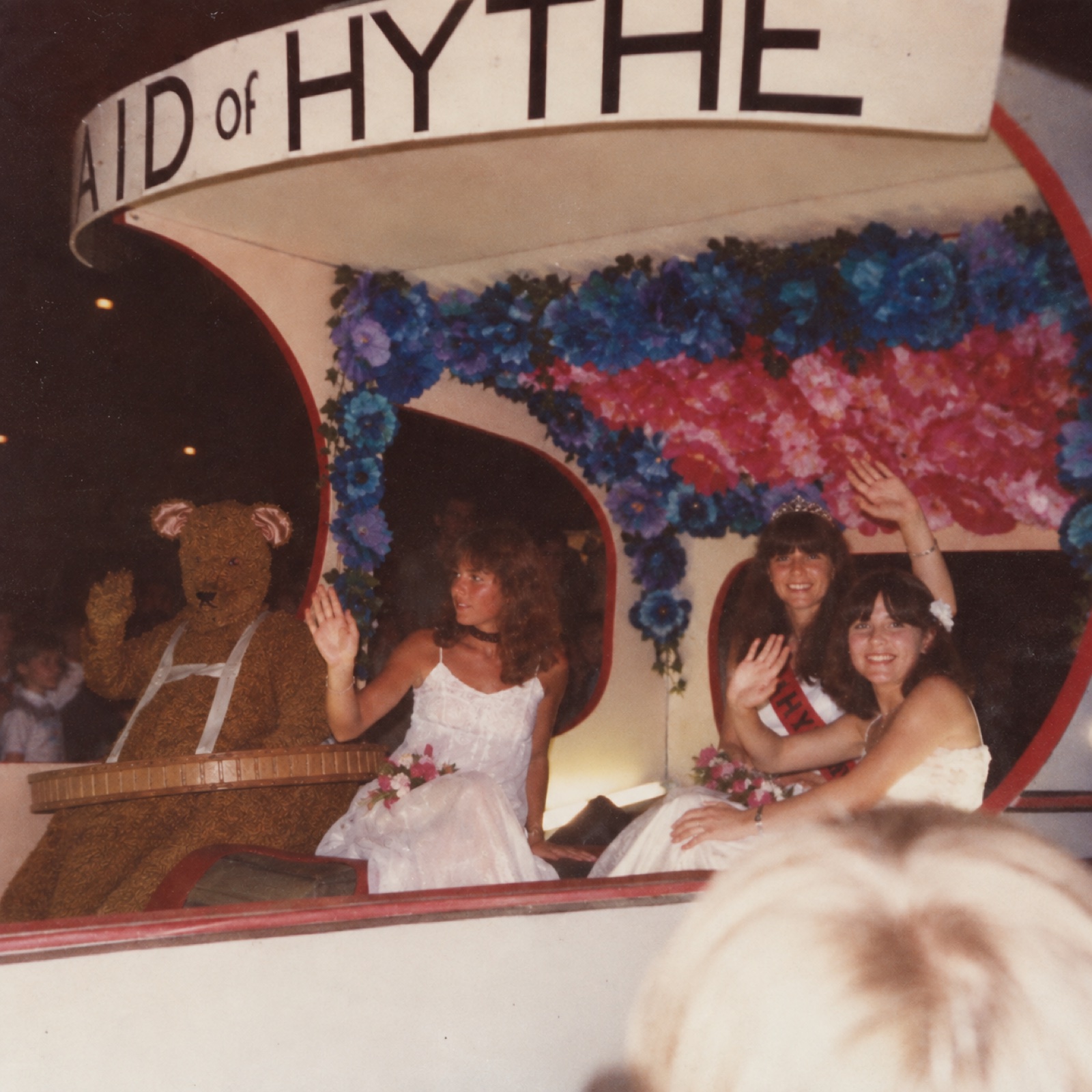
Carnival courts and dance floats brought different kinds of performance into the same procession. One carried the formal wave, dresses and flowers; another advertised the evening's entertainment with dancers and loudspeakers already in place.
The Bear managed to appear in both settings. On the dance float he stands among the performers. On the Maid of Hythe float he has joined the waving party. Neither photograph records how the seating was agreed.
Holiday Times 1984 / South Kent supplies the brochure setting for this part of the file. Its carnival feature, “Joining in the party fun”, places the procession within the summer holiday programme: an occasion for the town to turn out and for visitors to join the crowd.
In the Bear's version of the brochure papers, he takes the role of carnival mascot and procession leader, with fire-breathing among the advertised accomplishments. The dance float, carnival courts, decorated car and the Folkestone Flyers cycle group belong to the same continuing strand of appearances. The Bear was available wherever the procession required another participant.
The 1984 publication provides a fixed point within the wider 1950s–90s record. The accompanying photographs remain individually undated; the brochure year is not assigned to every float or street appearance.
Cross-reference: the Earl Grey and Millets sequence records an early-1980s appearance continuing beyond the welcome at the pub door.
In the later carnival strand, recognition outlasts the certainty of a booking. The Bear can still be identified in a crowd, even as the pub and club files become increasingly concerned with whether he should be admitted.
By the Bear Watch period, the same presence is being described in another vocabulary: street activity, obstruction, an unconfirmed appearance, a return after refusal. The carnival connection persists in the costume and the expectation of an audience.
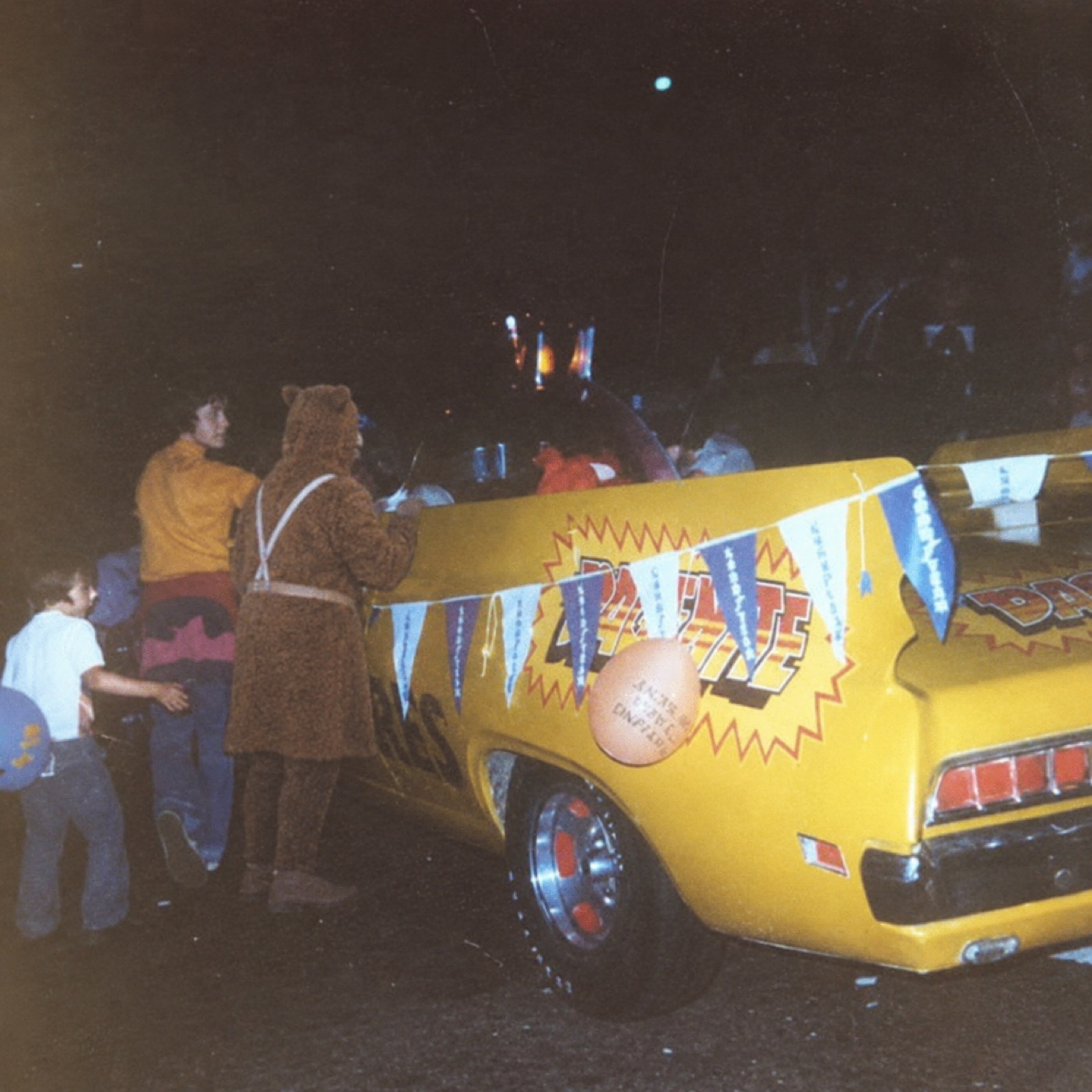
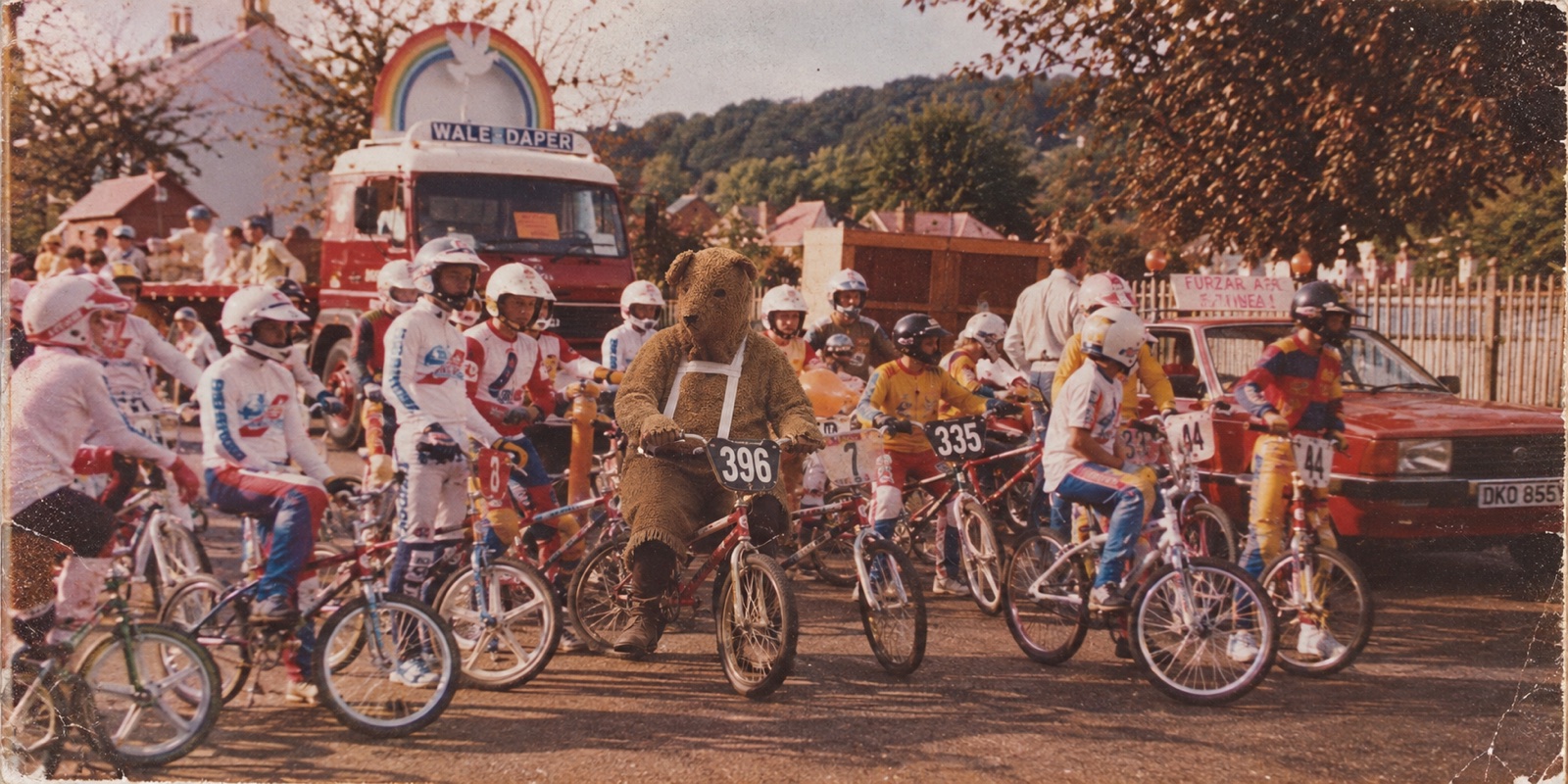
The vehicle photographs extend the record beyond the floats. One places him beside a yellow carnival car after dark; another gives him a numbered BMX bicycle among the Folkestone Flyers. A change of transport did not appear to require a change of costume.
| Strand | Connection | Open file |
|---|---|---|
| Folk & hoodening | The Horse, costume and public performance beside the Bear's procession appearances. | Folk file |
| Festival publicity | The Bear as a recognisable local figure, with uncertain individual billing. | 1977 papers |
| Dome & cabaret | The audience moves from the street to seafront entertainment. | Dome archive |
| Public houses | Admission is considered separately from participation in the procession. | Barring register |
| Bear Watch | The later street presence: performances, games and repeated attendance. | Watch file |
| Nightlife | The later record continues through venue refusals and recovered tapes. | CCTV file |
In the early 1980s, the Bear was refused entry to the Earl Grey on the Old High Street and fell backwards into the camping display outside Millets opposite.