The Bear and the Future That Never Arrived
September 1976 | Civic Archive / Regeneration / International Folklore Festival
THE MODEL | A NEW SEAFRONT | INTERNATIONAL DESTINATION | CIVIC OFFICES | NEWS FROM THE BURSTIN | ARCHIVE CONNECTIONS
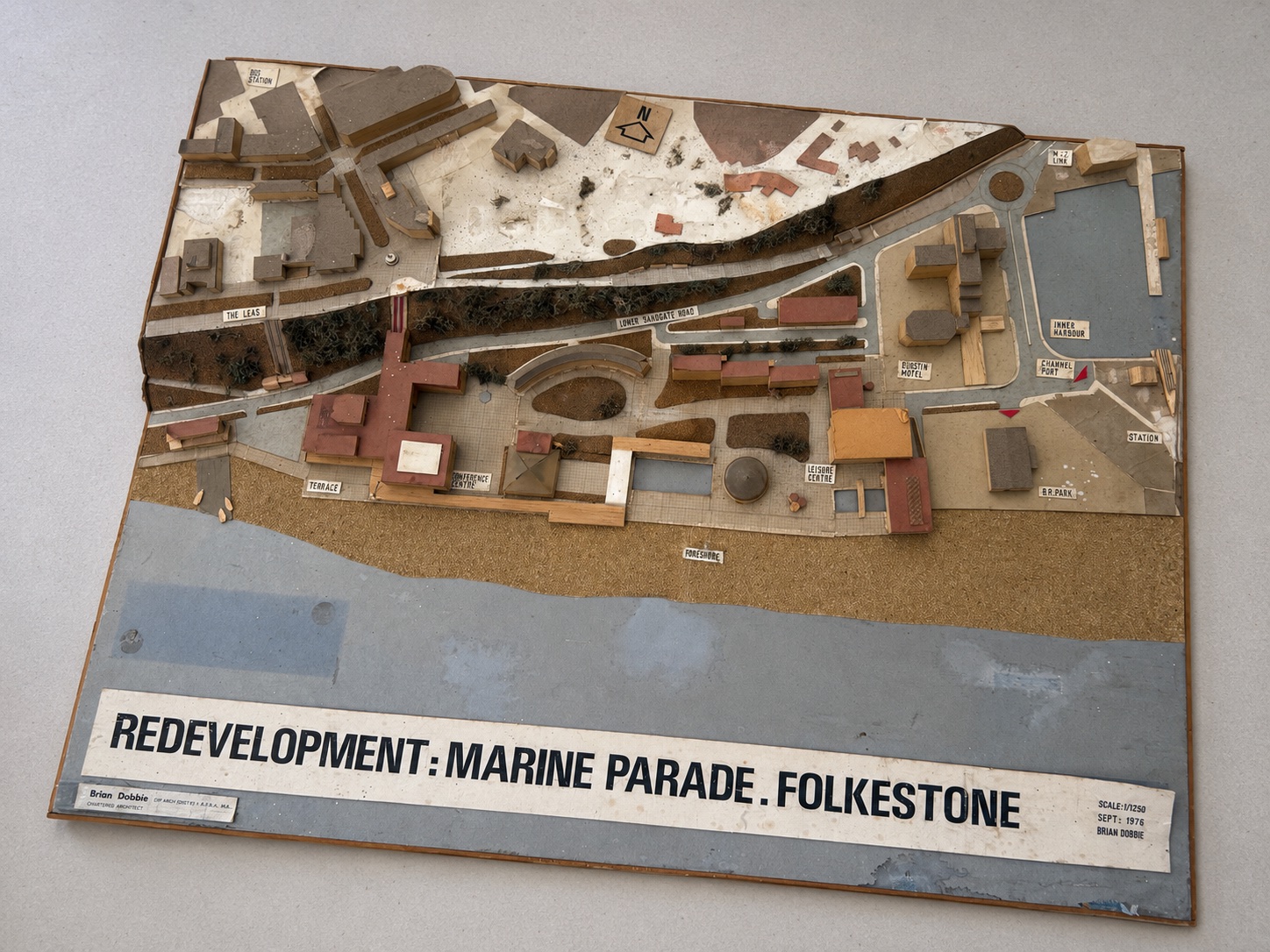
In September 1976 a large architectural model set out a possible future for Folkestone's Marine Parade. Associated with architect Brian Dobbie, it drew the existing seafront attractions, performance spaces, roads and harbour approaches into a single visitor district. Conference facilities, leisure provision and controlled pedestrian routes were presented as parts of the same civic project.
The proposal belongs to a period when the traditional resort economy was being asked to accommodate conference visitors, cross-Channel passengers, all-weather entertainment and a longer tourist season. The model did not arrive in the form shown. It remains unusually complete as a picture of what the town intended to become.
| Archive title | Marine Parade Masterplan, 1976 |
|---|---|
| Model date | September 1976 |
| Locations | Marine Parade; Marine Pavilion; Dome; Folkestone Harbour; Civic Offices |
| Related subjects | Brian Dobbie; conference tourism; seafront leisure; International Folklore Festival; Hotel Burstin; the Bear |
The tabletop view is the clearest surviving guide to the scheme. It retains the line of the Leas and Lower Sandgate Road above the seafront, the foreshore below, and the harbour and Channel port at the eastern edge. Labels identify the existing motel, a conference centre, leisure centre, terrace and other parts of the proposed visitor district.
The composition is comprehensive rather than piecemeal. Buildings, planted areas, roads and pedestrian approaches are arranged as one legible system. A rectangular pool area and the leisure buildings sit within the lower seafront band, while the Dome, Marine Pavilion and performance functions are drawn into a larger route between the Leas, Marine Parade and harbour.
The proposal treated architecture as part of Folkestone's tourist infrastructure. Performance, conference use, recreation and modern hotel accommodation were intended to support one another. The harbour was not a distant backdrop: it formed part of the approach to a town still defining itself through ferries, the Channel and the movement of visitors.
This was a practical attempt to answer changes already pressing on British seaside resorts. Indoor and all-weather uses could extend activity beyond a short summer season; conference rooms and hospitality could bring a different kind of visitor; clearer circulation could make the seafront read as a single destination rather than a row of neighbouring attractions.
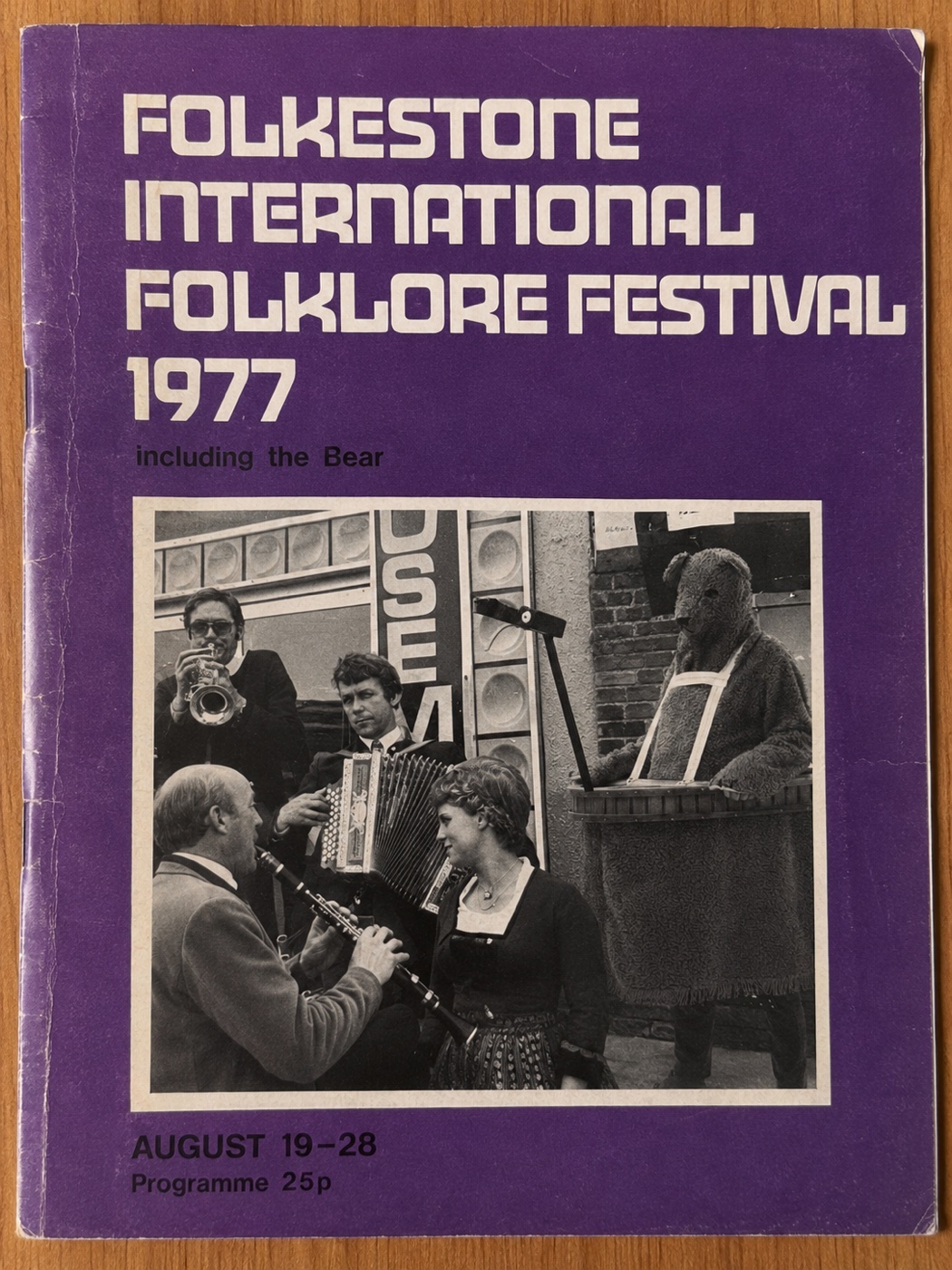
The Marine Parade proposal also belonged to a wider civic ambition. The Folkestone International Folklore Festival, established in 1961 and held biennially during its principal years, brought visiting groups, music, dance, costume and procession into the town's public spaces. Its non-competitive programme presented Folkestone as a place of welcome and exchange at the Channel crossing.
The festival and the masterplan used different means to produce a similar public image: international, outward-looking and capable of receiving large numbers of visitors. Leas Cliff Hall and other civic settings supplied the formal programme; seafront hotels, streets and leisure venues supplied its hospitality and public life.
In the divided Europe of the 1960s and 1970s, an international folklore festival offered a comparatively open setting in which ensembles from different political systems could meet and perform. National and regional identities were displayed through music, costume and customary performance, while the event itself was organised as civic hospitality rather than a political conference.
Festival records document visiting groups from across Europe, bringing music, dance, costume and procession into Folkestone's civic and seafront spaces.
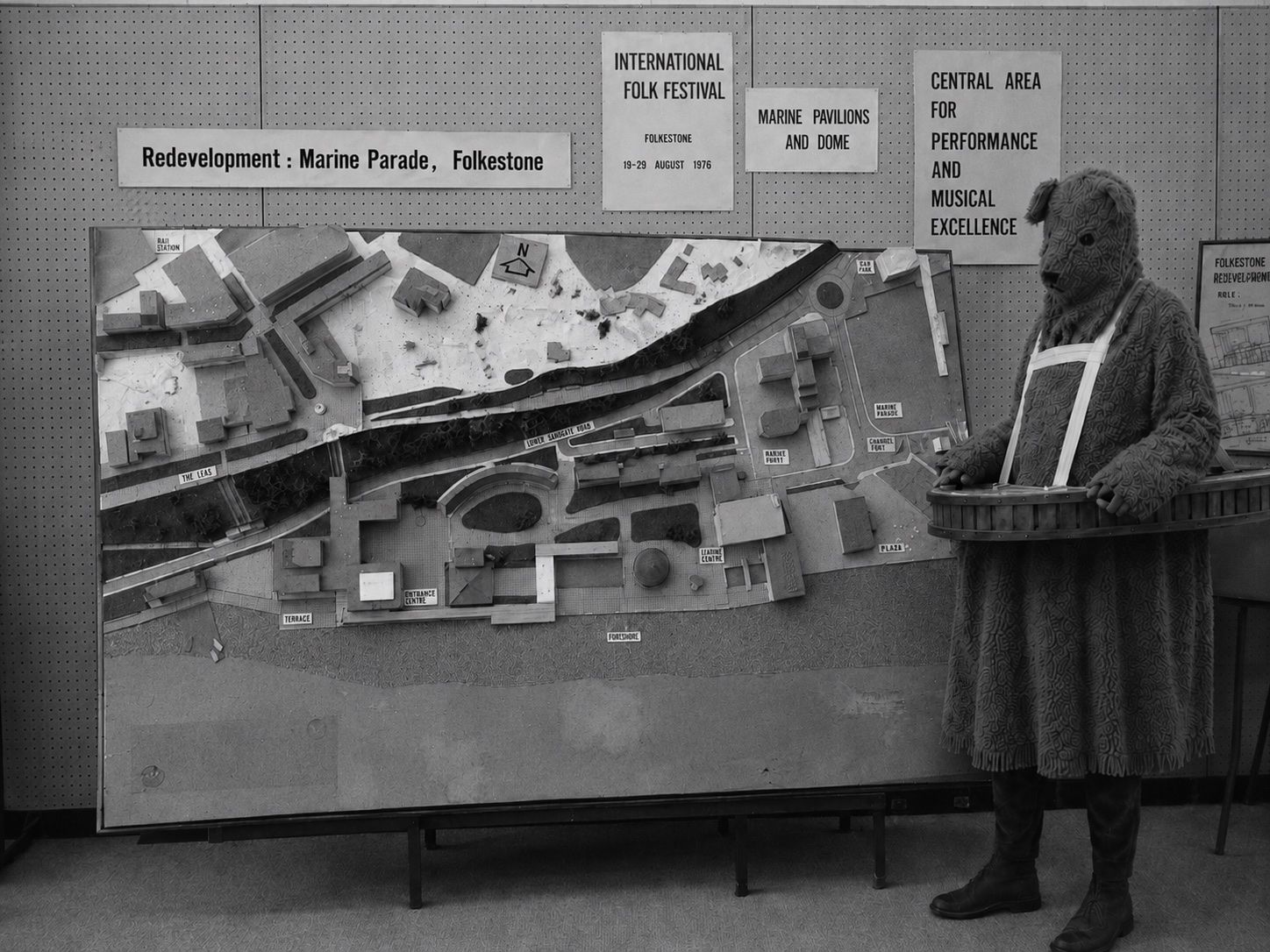
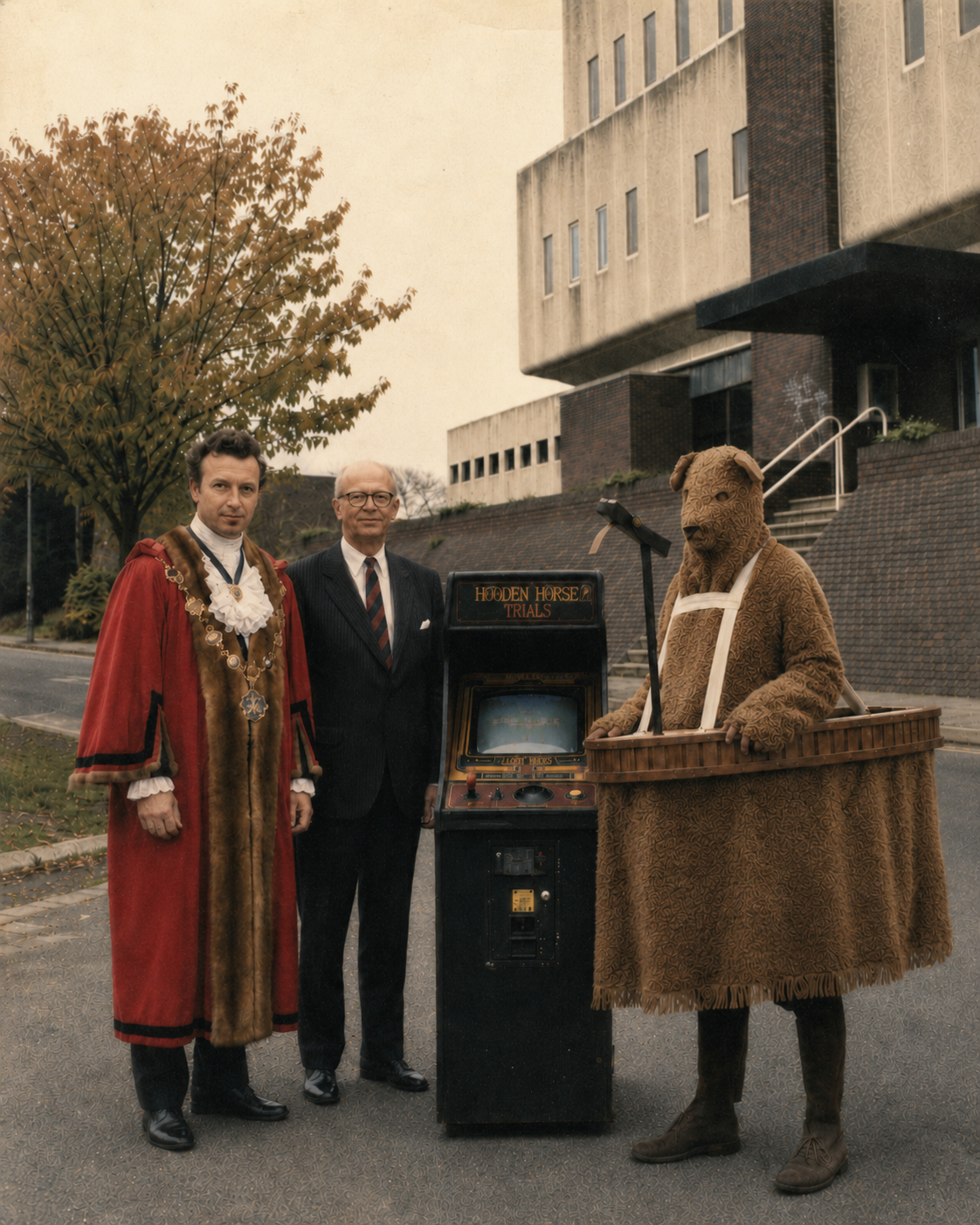
The Bear is shown at the Civic Offices as a figurehead for the Marine Parade plans, the International Folk Festival, and the programme around the Marine Pavilion and Dome.
In the display photographs, he is a familiar public mascot: there to welcome visitors, draw attention to the model and give the different projects a recognisable face.
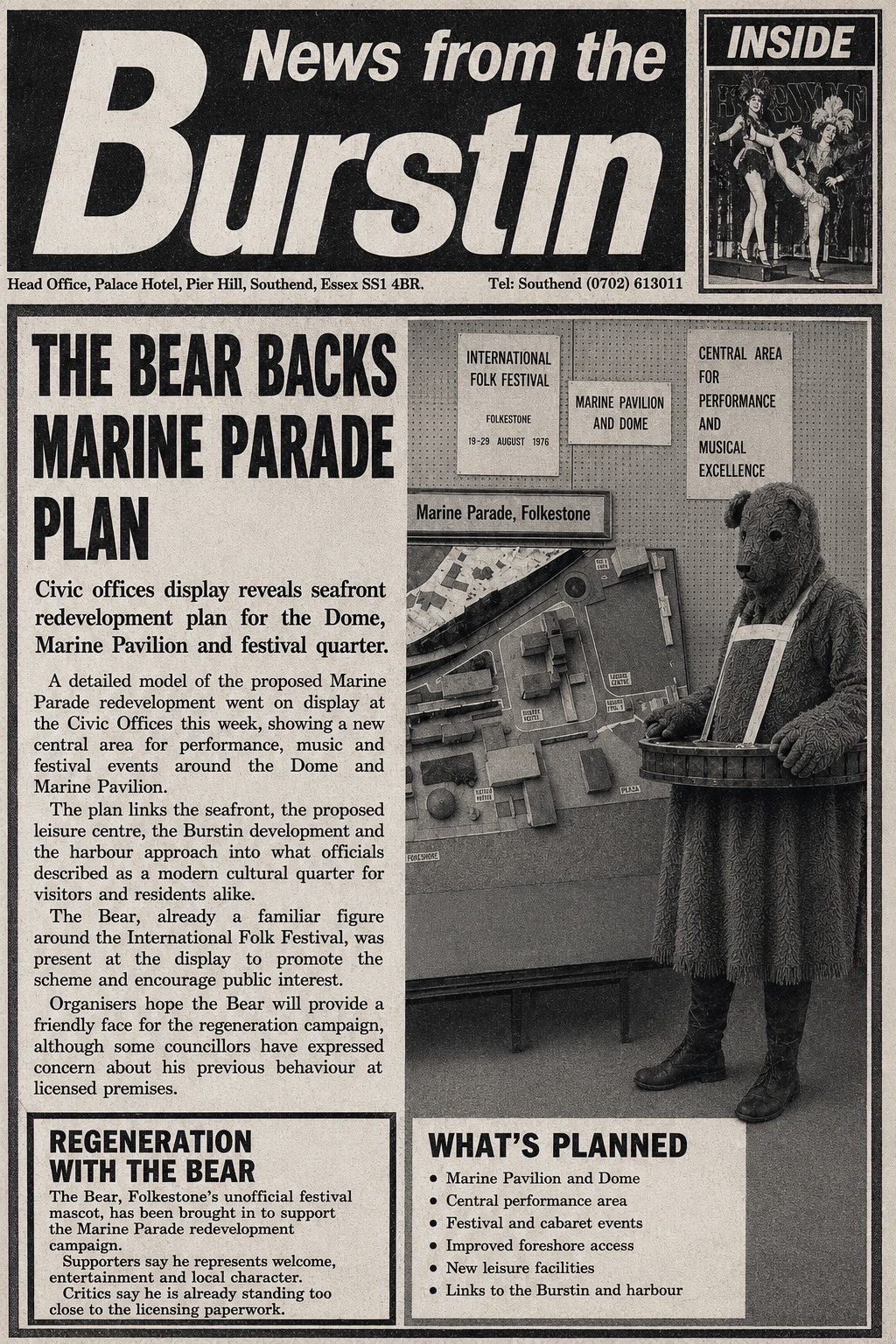
The Hotel Burstin belonged to the same changing seafront visitor economy. Its publicity placed hotel accommodation, coach parties and cabaret close to the Dome, Pavilion and ferry approaches.
News from the Burstin presents the Bear as the familiar mascot for that wider programme, linking the Marine Parade plans with hotel entertainment and festival life.
The redevelopment did not arrive in the form presented by the model. Some elements of the seafront survived, some were altered or lost, and later proposals occupied the same ground. The model's careful routes and complete visitor economy remain fixed in September 1976.
The Bear did not cause this outcome. He simply persists in the associated photographs more readily than much of the proposed architecture. The images retain him beside a future that was planned, pictured and publicly presented, but never fully reached.
| Picture | Related file | Connection |
|---|---|---|
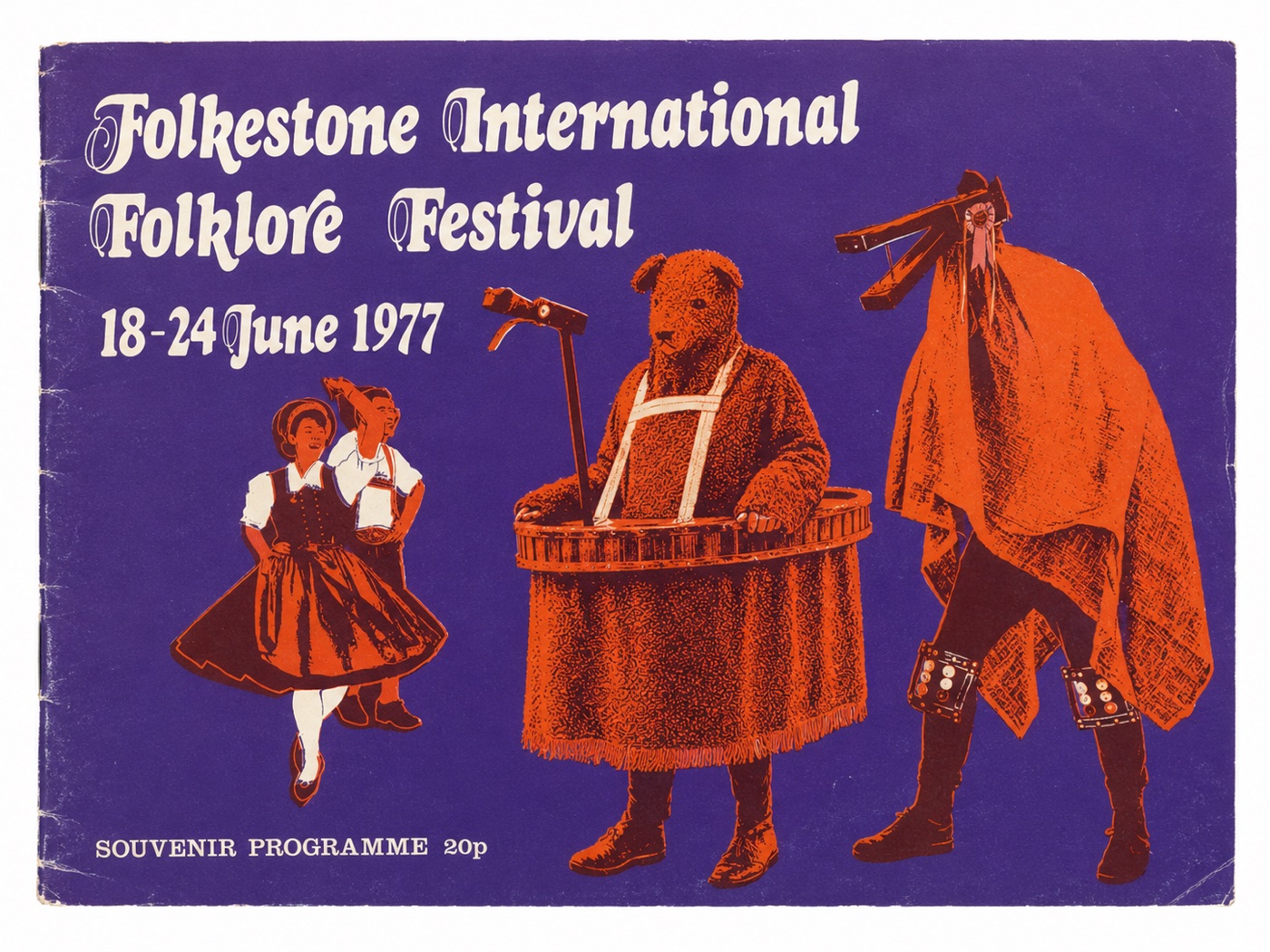 |
International Folklore
Festival Programme file |
The principal festival-paper sequence and the Bear's uncertain place within the public programme. |
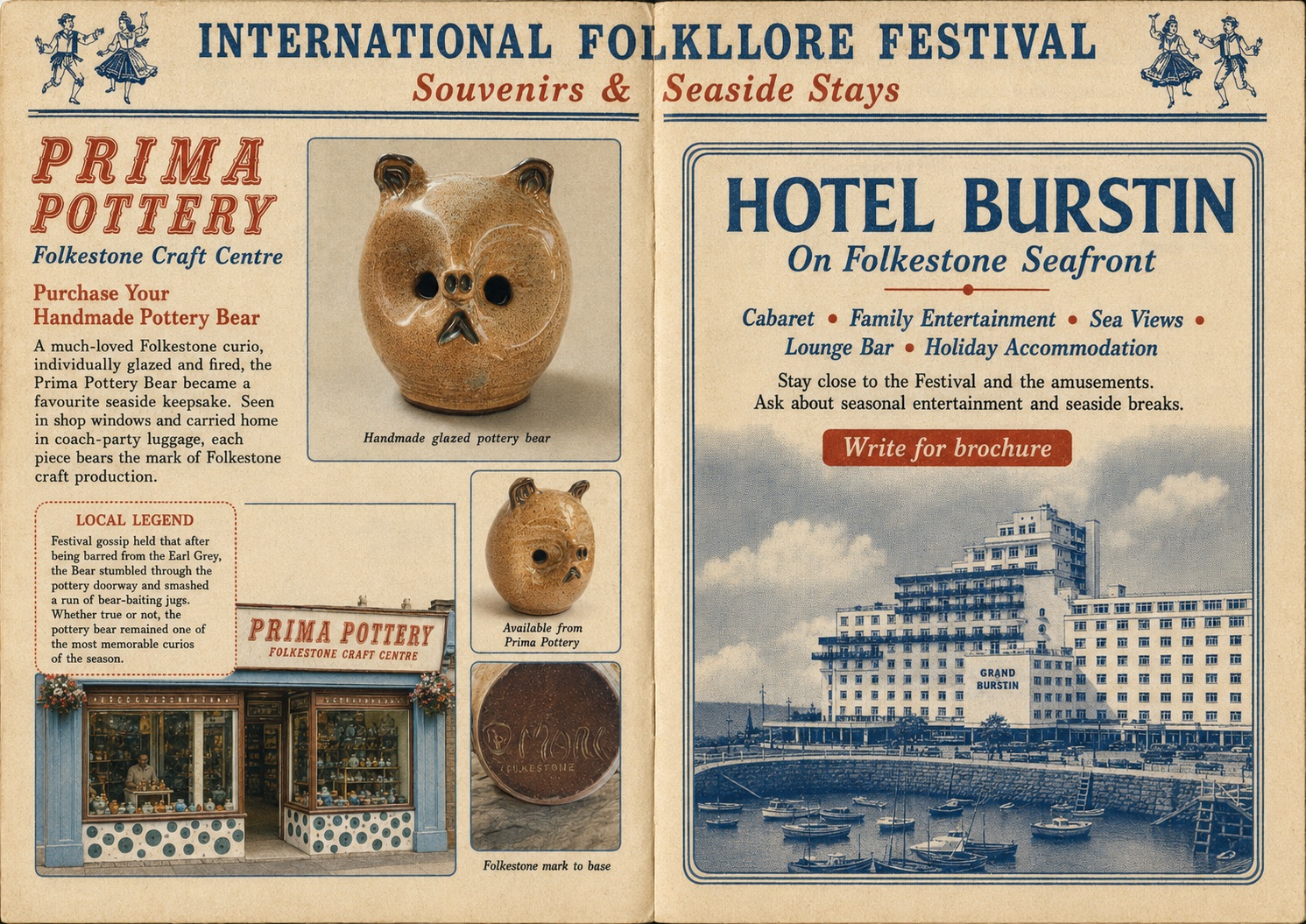 |
International
Folklore Fiasco Mascot file |
The festival, craft, hotel and early mascot material that surrounds the 1976 display. |
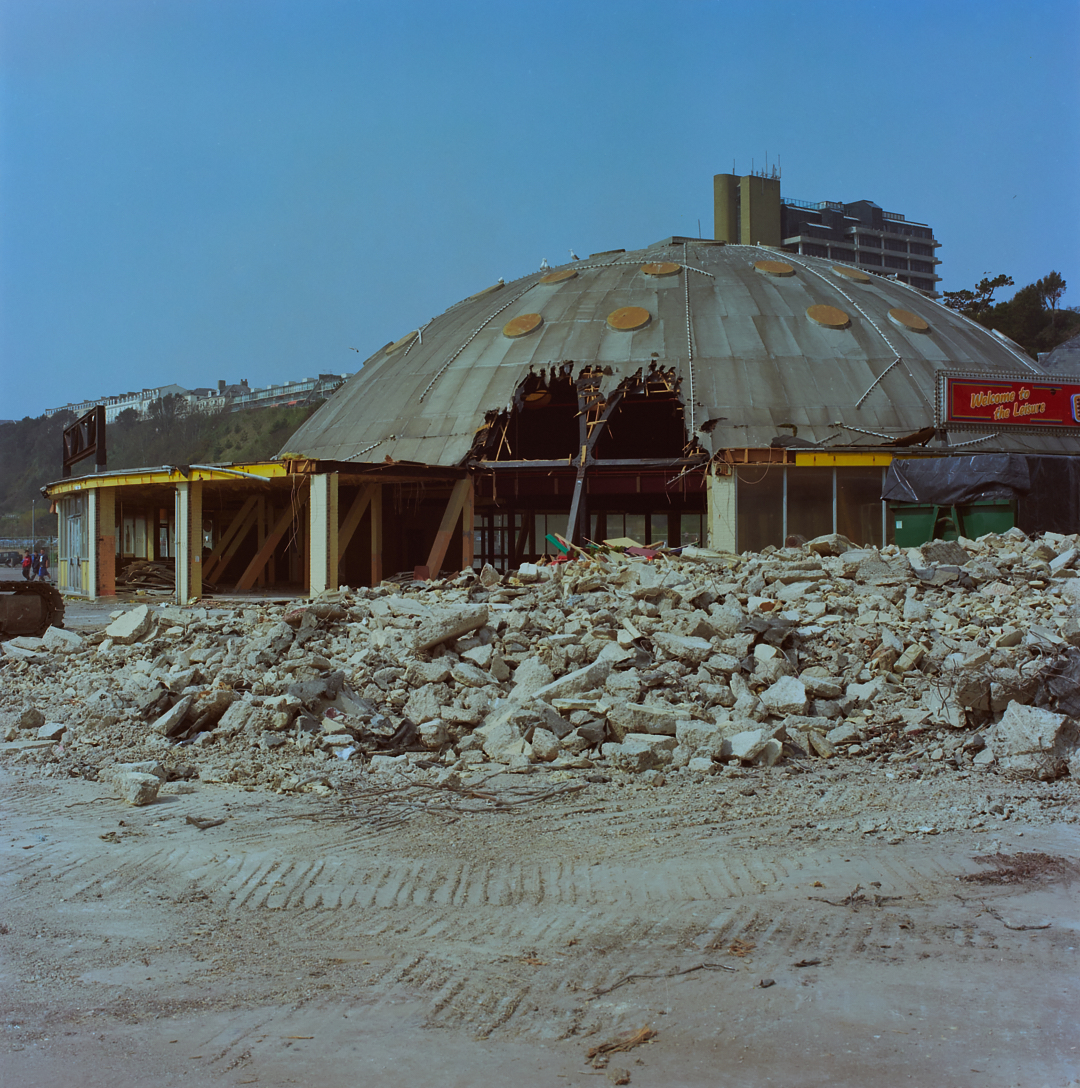 |
Dome and Rotunda Section overview |
The Pavilion, Dome and amusement-ground history before and after the masterplan. |
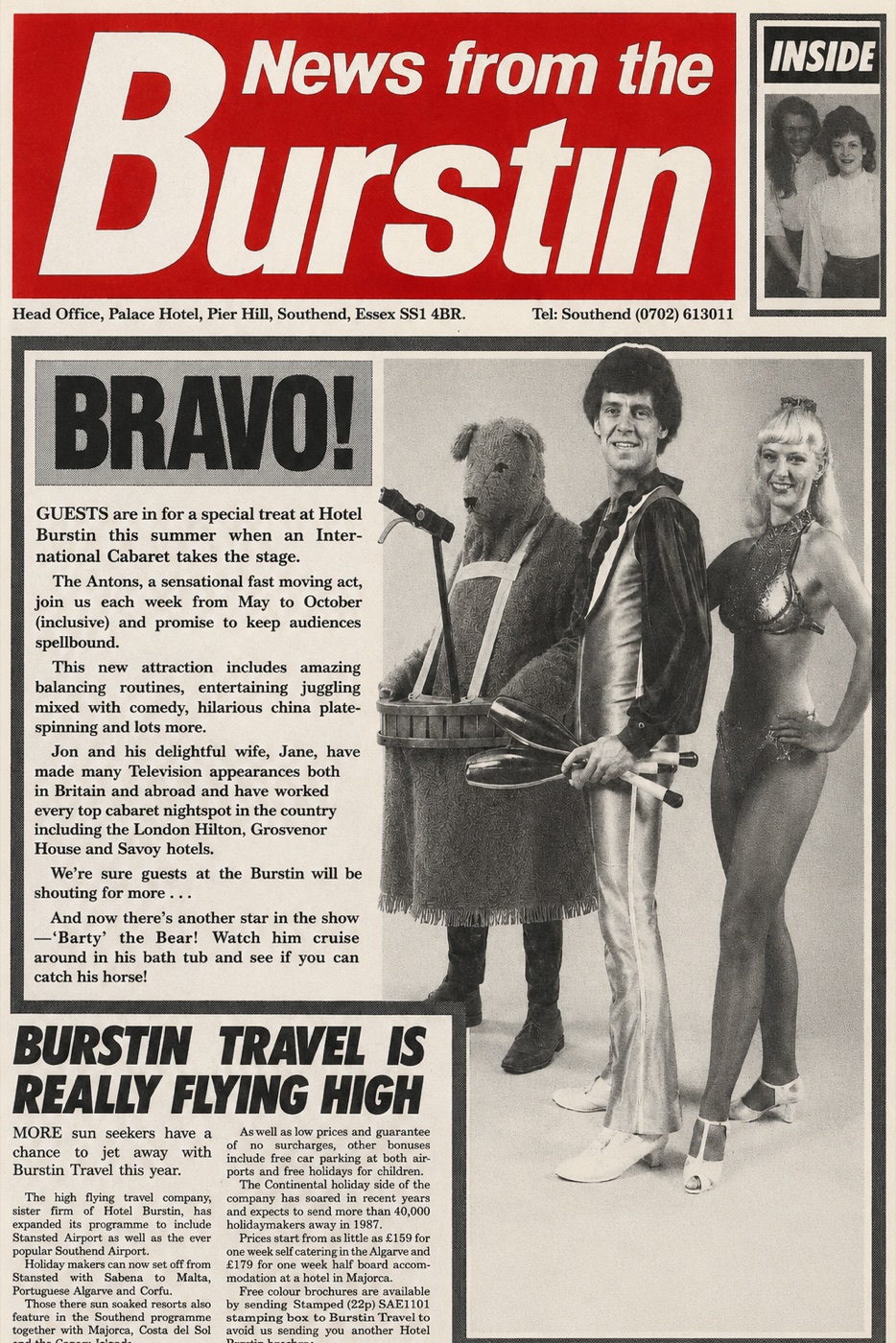 |
Hotel Burstin Cabaret transfer |
The later hotel-entertainment phase and the Bear's decline from civic novelty to management concern. |
 |
Hooden Horse
Trials Club Shepway Games |
The later game strand, drawing together the Dome, pub route and festival material. |
 |
CCTV Spotted
Bear Antics Barring archive |
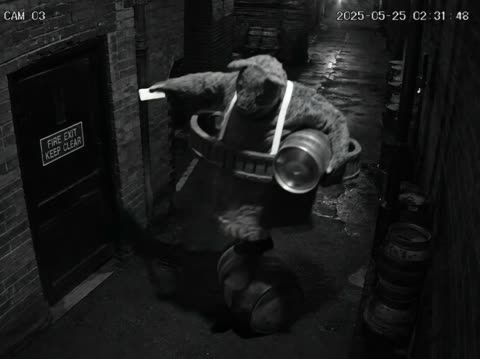
The late community record, after the public-facing appointments had ended. |