« Return to Folkestone folklore file
Shorncliffe Mascotry, Military Misconduct and the Origins of Bear Watch
File class: SHORNCLIFFE / MASCOTRY / RECOVERY / LATER BARRING
| Principal location | Shorncliffe Camp, near Folkestone |
|---|---|
| Historical anchor | Teddy, King’s Royal Rifles regimental bear, Christmas 1910 |
| File status | DOCUMENTED EVENT / LATER INTERPRETATION DISPUTED |
BEAR DOSSIER | SHEPWAY BEAR WATCH | BARRING REGISTER | CCTV FILE | HOODEN HORSE TRIALS
The first surviving Bear barring did not take place in a public house. It followed the escape of a regimental bear from Shorncliffe Camp during Christmas 1910. Soldiers and police attempted to return the animal to military control. Later Bear files repeatedly confuse this recovery operation with the district-wide public-house exclusions of the following century.
DOCUMENTED. The Shorncliffe account identifies Teddy as a Himalayan bear associated with the King’s Royal Rifles. He escaped on Christmas night, remained loose for about forty hours, and prompted a search around Folkestone and Hythe. Ginger beer was reportedly tried during the recovery. The final return to restraint involved several soldiers.
LATER ARCHIVE INTERPRETATION. The Bear files treat this as the beginning of a local administrative pattern: mascot, escape, recovery, warning notice, renewed appearance.
| File subject | Status | Record |
|---|---|---|
| Teddy of Shorncliffe | DOCUMENTED | Himalayan bear associated with the King’s Royal Rifles. The Shorncliffe escape account belongs to Christmas 1910. |
| Winnie | DOCUMENTED / SEPARATE HISTORY | Canadian military bear acquired by veterinary officer Harry Colebourn, brought to England in 1914, and later placed at London Zoo. Winnie was not the Shorncliffe bear. |
| Unnamed Barrack Bear | DISPUTED | Figure appearing in later recollection and publicity material. No stable identity, date or regimental record has been located. |
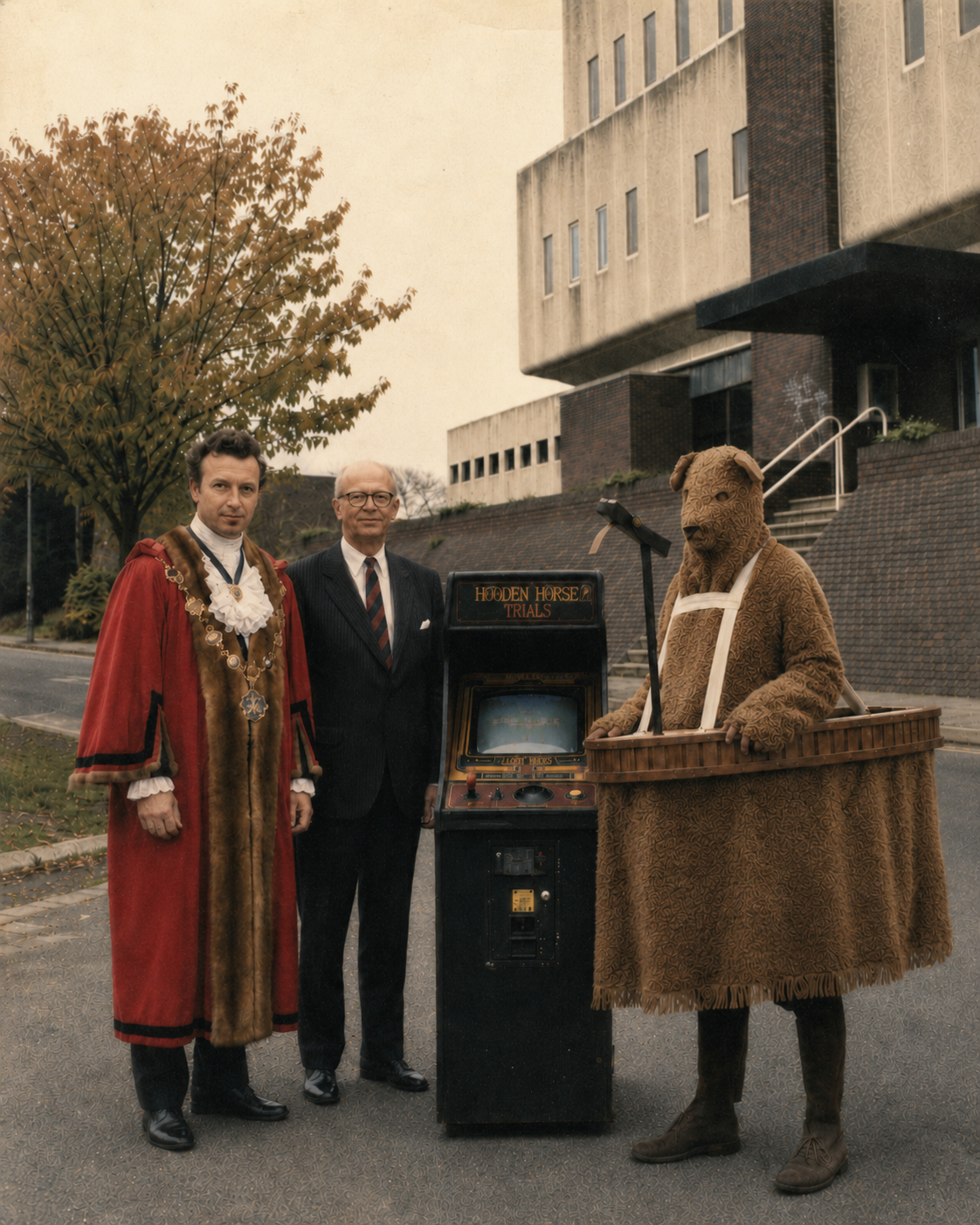
| The Folkestone Bear | LATER FILE | Human performer in a hooded fleece costume and wooden hoop. Relationship to earlier bears is unresolved. |
By the middle of the century, several Bear accounts had merged. Teddy, Winnie and an unnamed Shorncliffe mascot were sometimes treated as the same animal. The archive does not accept that identification.
A later image-caption account gives Teddy the title “ASBO bear” and says that he had been drummed out of the ranks for anti-social behaviour and going AWOL. The phrase is plainly modern, but it has stayed attached to the story because it makes the later Bear Watch comparison unusually clear: a mascot exceeds the terms of its welcome, leaves its allotted place, and is returned with increasing difficulty.
The Shorncliffe Trust’s 1910 account provides the firmer record beneath that retelling. Teddy escaped on Christmas night, was loose for about forty hours, and was recovered after soldiers and police joined the search around Folkestone and Hythe. The bear reportedly refused ginger beer and resisted attempts at recapture. The later language of barring belongs to the story’s afterlife, not to the original military report.
Source records: Shorncliffe Trust, “King’s Royal Rifles Lose Their Teddy Bear” | Flickr, “ASBO bear”. The Flickr photograph is all rights reserved and is linked here, not reproduced.
The names are often folded together in later retelling, but the records describe different things. Teddy was a Himalayan bear linked to the King’s Royal Rifles at Shorncliffe. The Folkestone Bear is the later human performer in a hooded fleece costume, wooden hoop and microphone stand. Winnie is a separate Canadian military bear with a 1914 history.
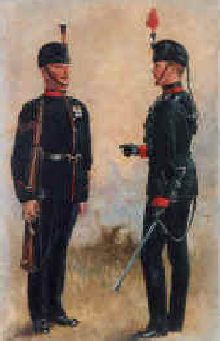
No verified photograph of Teddy has been located for this file. The period illustration below identifies the King’s Royal Rifle Corps setting; it is not a portrait of Teddy.
| Subject | How to identify it | File position |
|---|---|---|
| Teddy of Shorncliffe | Himalayan bear; King’s Royal Rifles association; Christmas 1910 escape. | Historical animal. No verified portrait presently held. |
| Winnie | Canadian military bear; acquired by Harry Colebourn in 1914; later London Zoo. | Separate animal and history. |
| The Folkestone Bear | Human performer in a fleece bear costume, wooden hoop and microphone stand. | Later performance and barring archive. |
| Date | Classification | Archive entry |
|---|---|---|
| 25 December 1910 | DOCUMENTED | Teddy escapes from Shorncliffe Camp. |
| December 1910 | REPORTED | Soldiers and police search locally; ginger beer is offered during recovery. |
| 1914-18 | HISTORICAL CONTEXT | Military movement between camp, town, harbour and railway becomes an enduring part of Folkestone life. |
| Date unknown | DISPUTED | Stories of Teddy, Winnie and other military mascots begin to merge in later retelling. |
| 1970s | LATER ARCHIVE | A Bear figure appears in festival culture, Marine Parade publicity and civic promotion. |
| Later period | LATER ARCHIVE | Hotel, pub, karaoke and Rotunda files record performance claims followed by exclusion. |
| Bear Watch period | AUTHORITY UNCONFIRMED | Shared warning signs and barring notices appear across the district. |
DISPUTED BEAR TESTIMONY. The later Bear maintained that singing, gaming and repeated choruses formed part of his original mascot training. He appears to have understood encouragement as a permanent booking, and a shouted chorus as permission to perform.
Later files connect this claim with marching songs, call-and-response, target games, cards, bottle games, raffles, minor wagers and impossible errands. None of these activities are evidence of an official training programme. They are the Bear’s explanation for what happened when street bingo, karaoke and pavement games resumed without the original audience.
“That was how they taught me at Shorncliffe.”
Statement attributed to the Bear; date and recording source unknown.
Shorncliffe and Folkestone were linked by routes of leave, travel, entertainment and return. Some surviving local accounts describe drinking, songs, practical jokes, games and minor disturbances associated with troops on leave. They do not support a general account of soldiers as disorderly, and the archive does not treat barrack culture as a single behaviour.
The later Bear lore condenses several generations of military movement into a simpler story: the Bear copied the least suitable parts of informal social life and treated them as official instructions. His understanding of last orders, entry fees and audience participation is therefore filed as a damaged inheritance rather than a military custom.
The 1910 record concerns an escaped animal and a military recovery. Later files describe a mascot, a performer, a public nuisance and a person in a costume. The status changed according to the office completing the form.
Military authorities treated the first case as recovery. Civic authorities recorded a disturbance. Publicans later adopted the language of exclusion without inheriting responsibility for recapture. Shepway Bear Watch appears in the gap between these systems, issuing notices without a settled account of who had asked for them.
| Authority | Usual classification | Unresolved point |
|---|---|---|
| Regimental responsibility | Mascot / animal under recovery | When did that responsibility end? |
| Police and civic officers | Escape / disturbance | Which later reports belong to civic records? |
| Licensed premises | Excluded performer | Who maintained the shared warnings? |
| Shepway Bear Watch | Community information system | Authority and membership remain unconfirmed. |
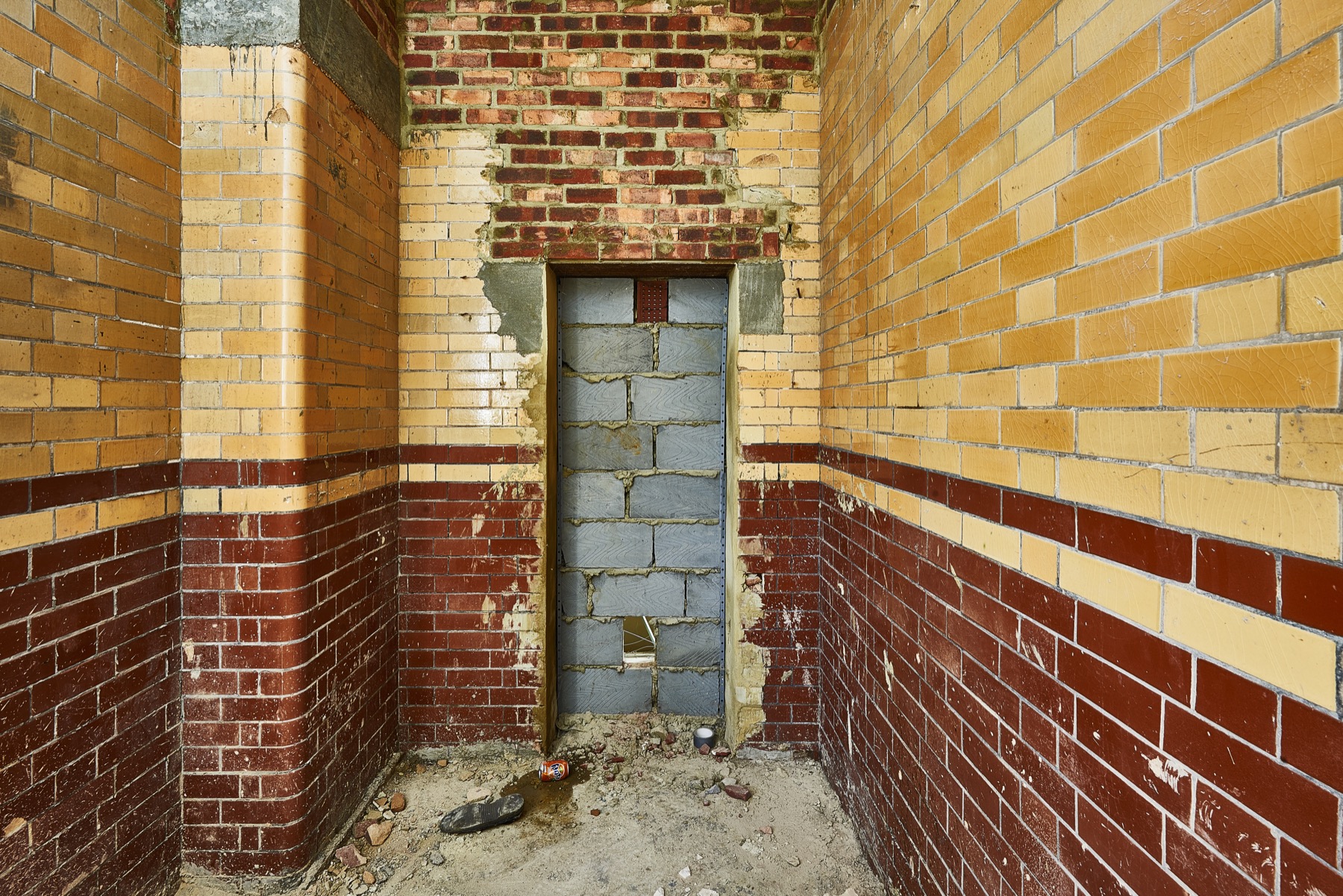
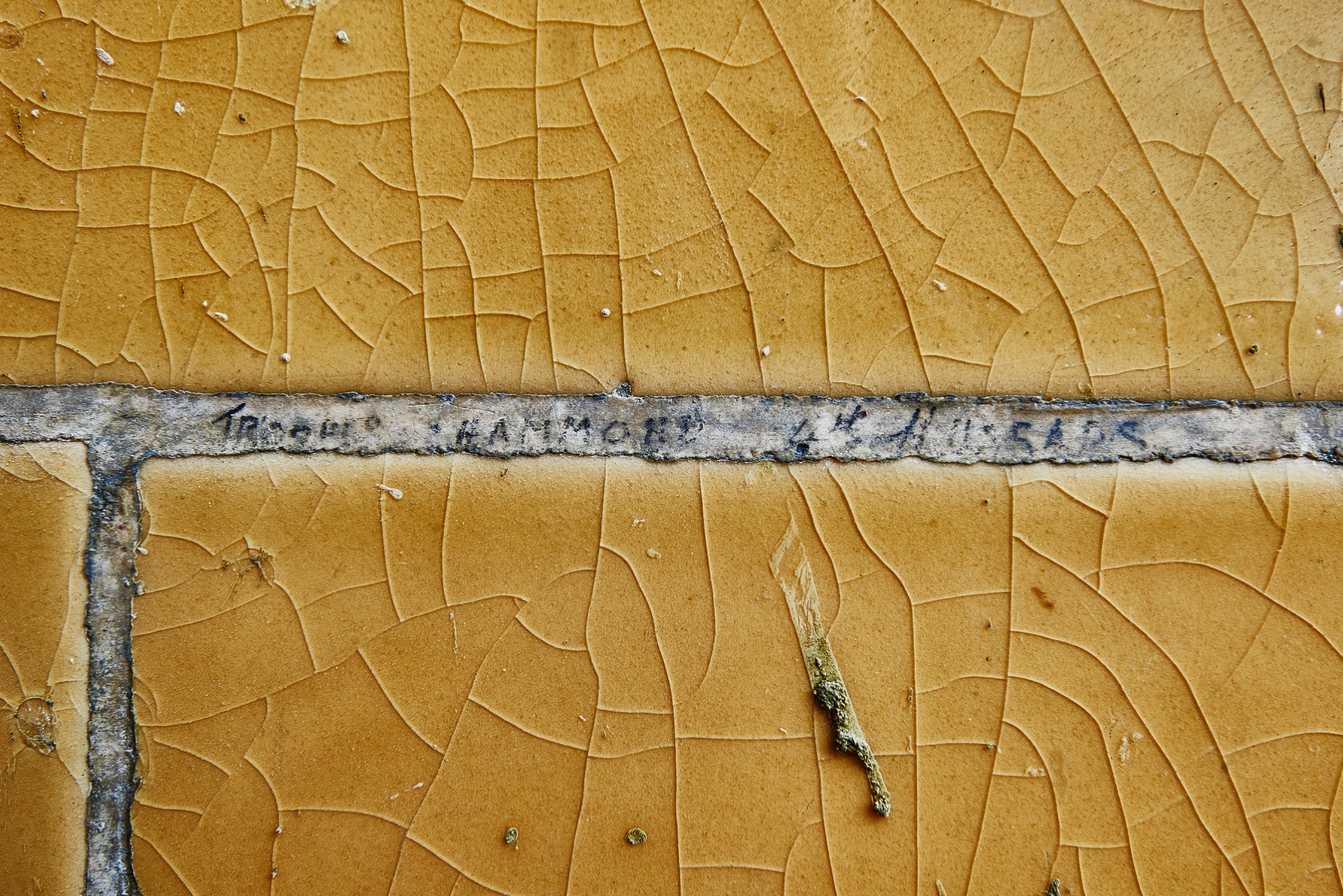
Photographs made during Folkestone Museum’s refurbishment record the tiled interior and pencil-marked walls of the former lock-up. The room sits at the point where civic detention, pub-world disorder and the public life of the town meet. The marks are retained as evidence of use and holding, not as a completed transcript of individual offences or identities.
ATTRIBUTION UNCERTAIN. Pencil lines, initials and partial phrases are visible across the tiles. This file does not assign them to named soldiers, prisoners or members of the public. Later Bear notes claim that the walls supplied a programme of instruction. No evidence has been found that the lock-up operated as a rehearsal space.
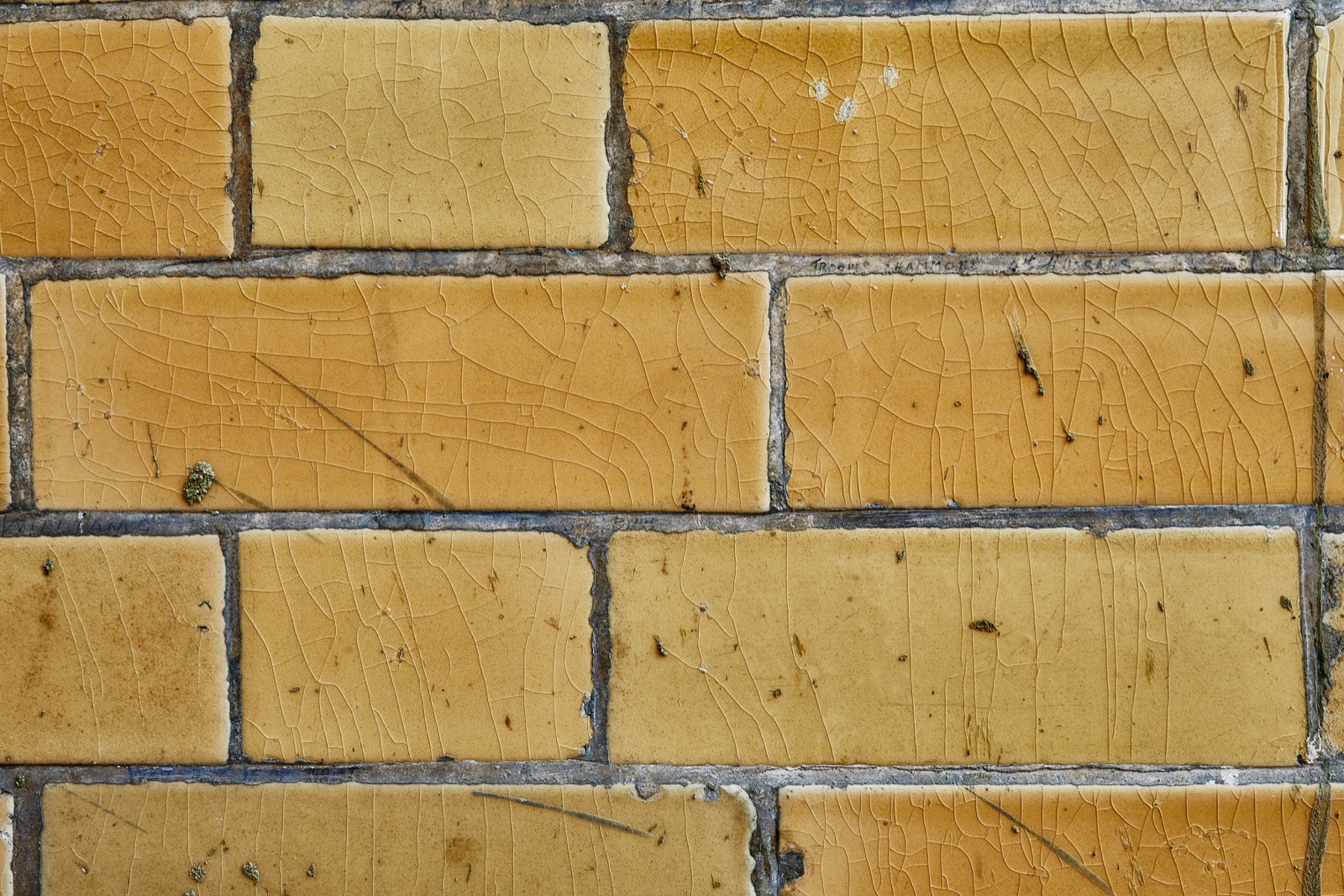
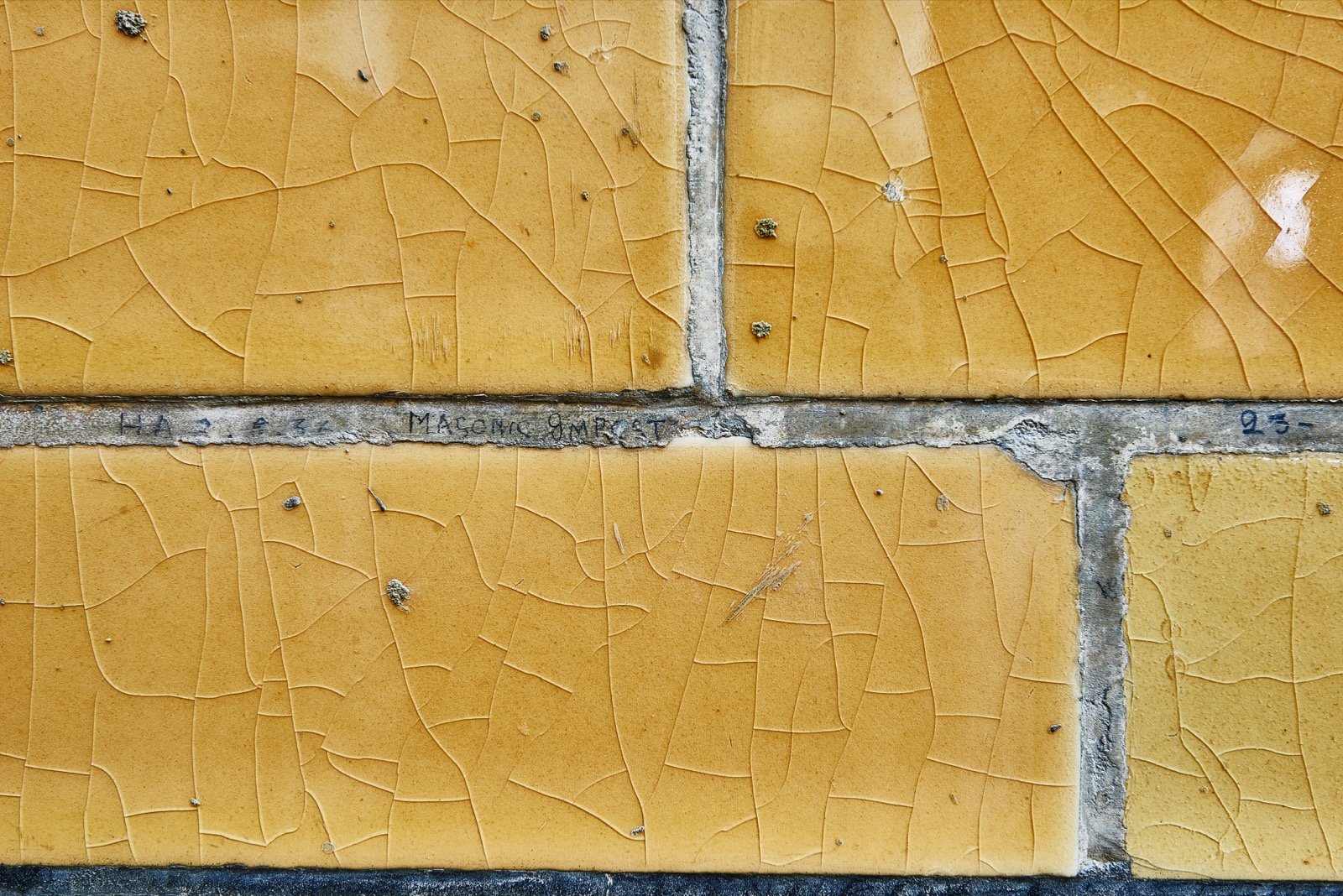
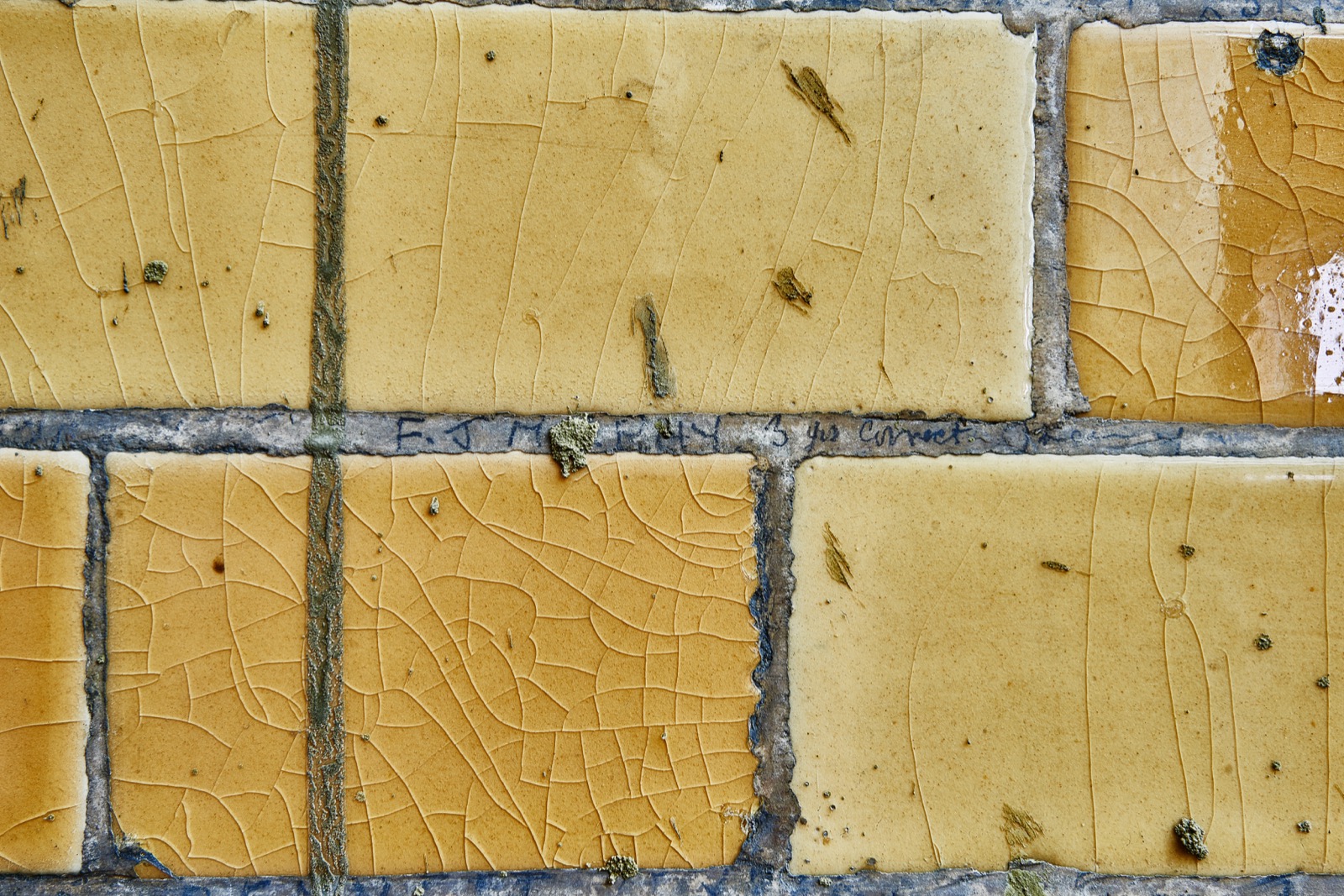
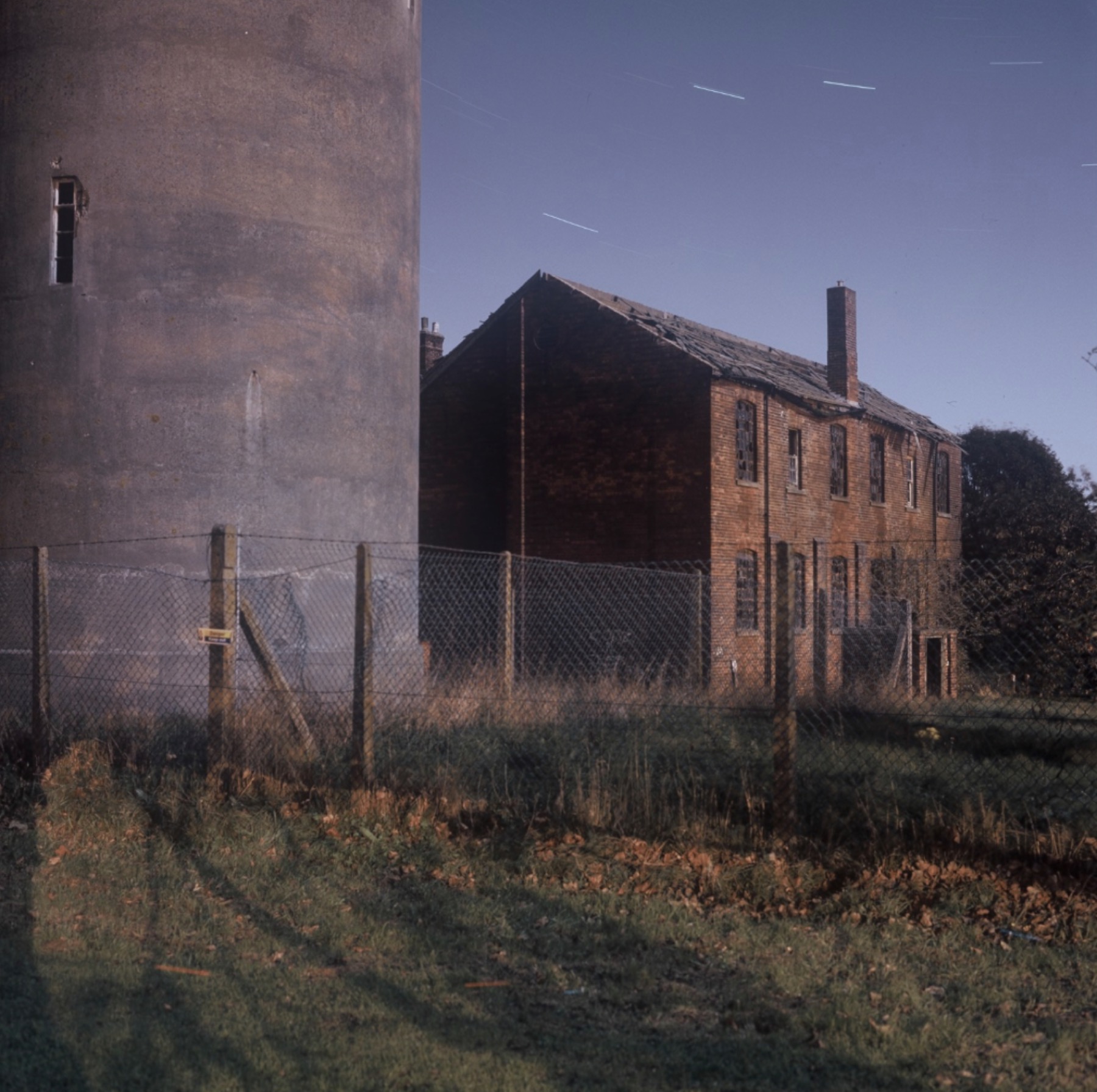
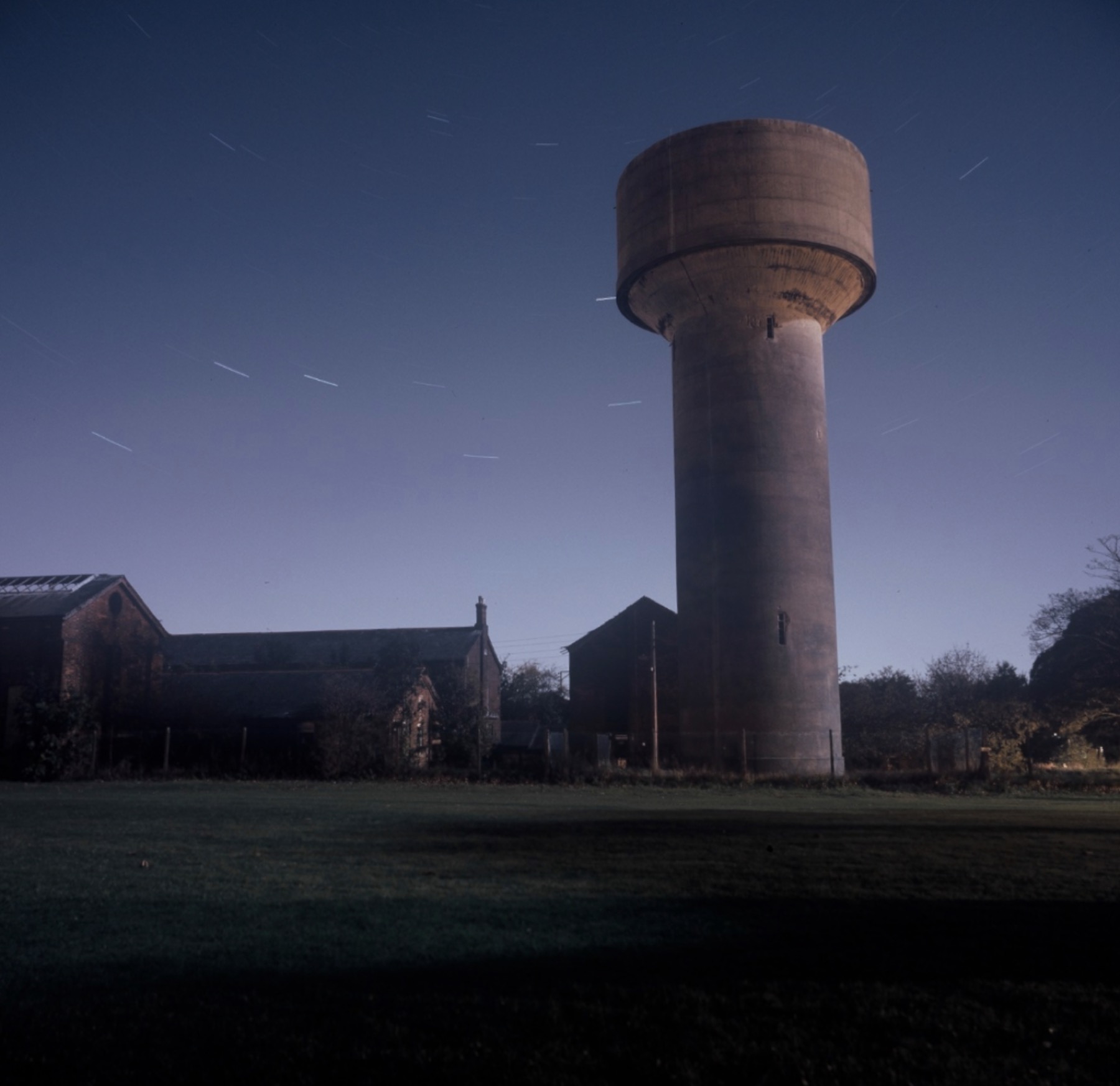
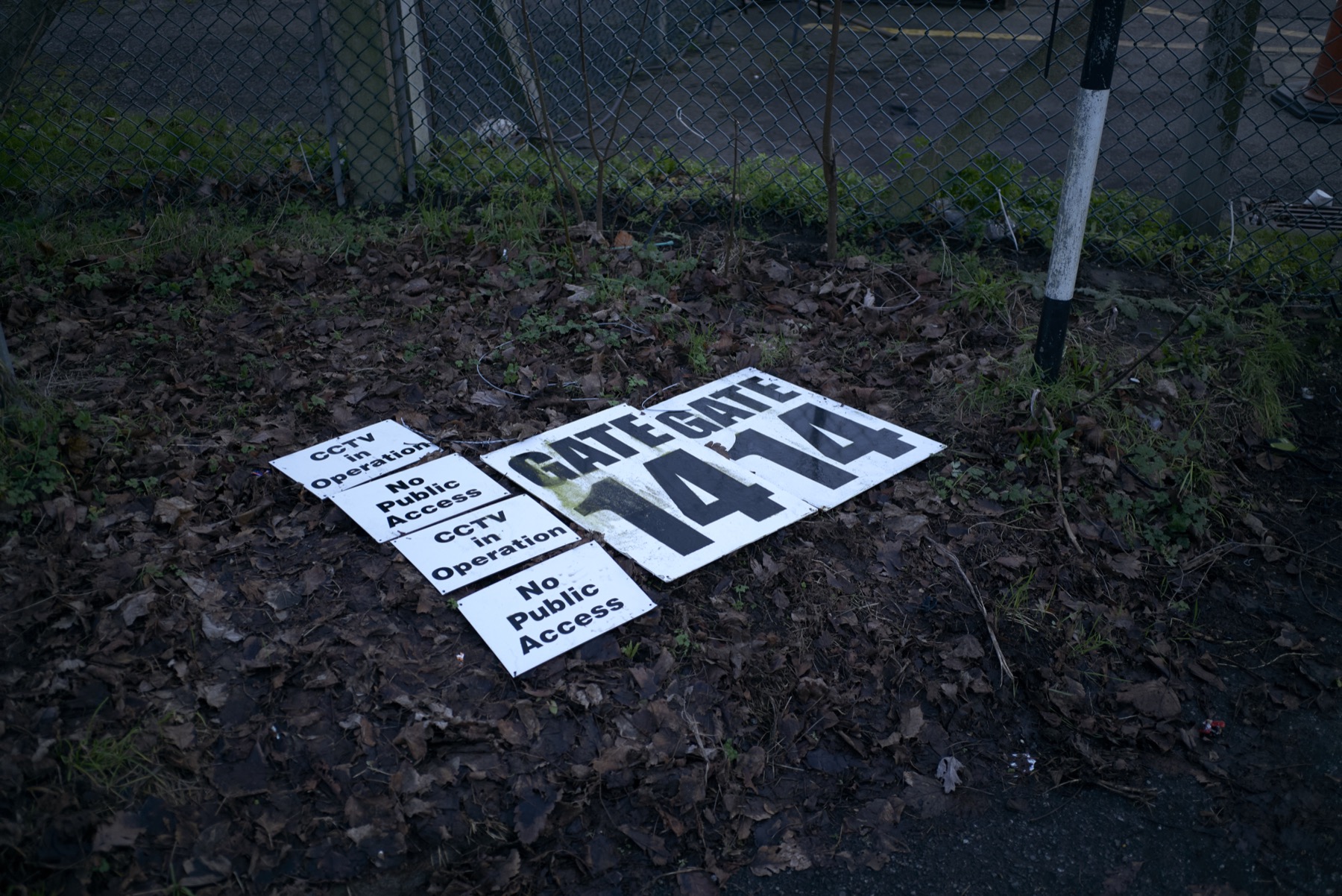
A later photographic sequence records surviving camp-edge structures, fences and warning notices before the loss of much of the former barracks environment. These are not photographs of Teddy’s 1910 escape. They show the later landscape through which the Shorncliffe story was remembered, fenced, repurposed and eventually removed.
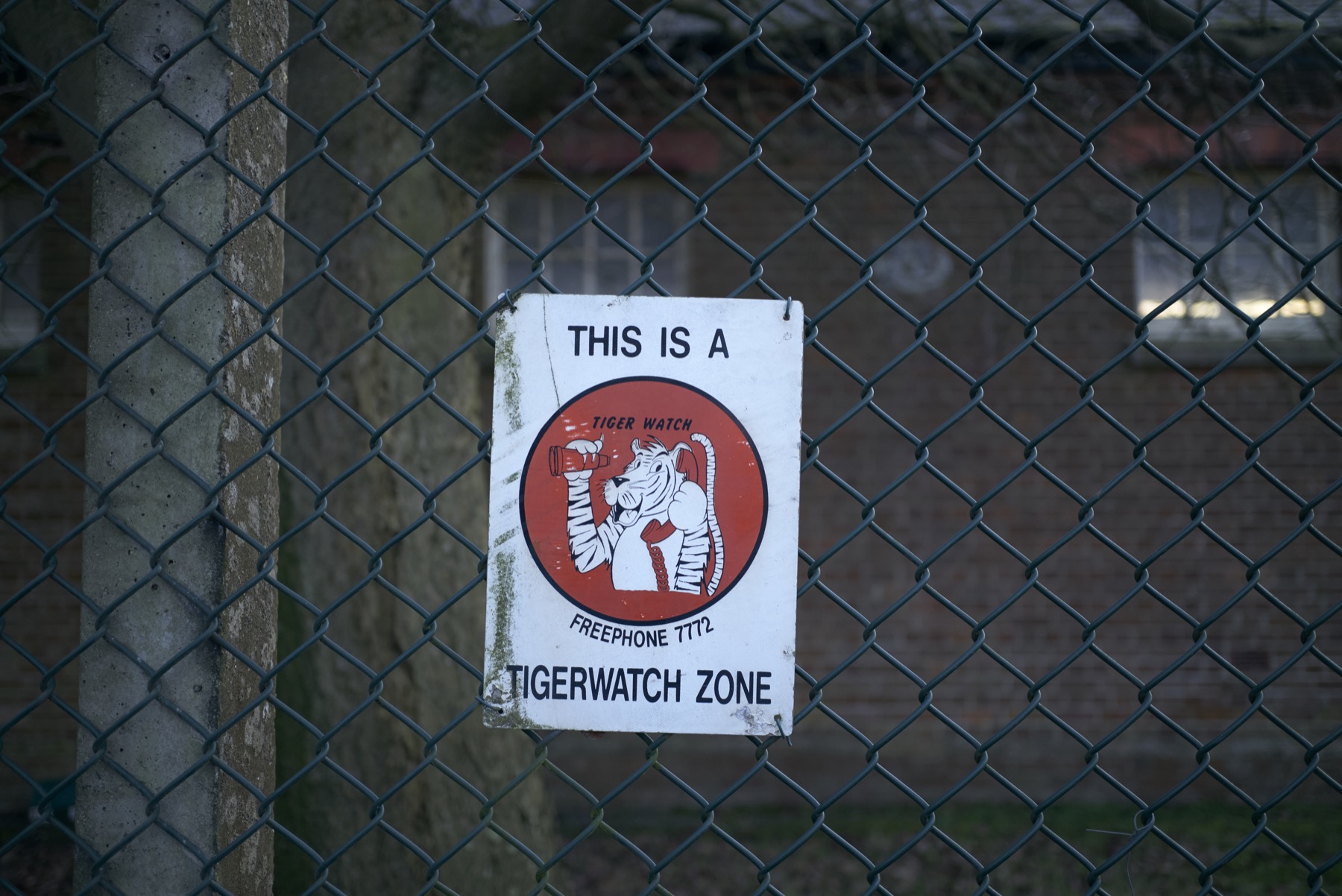
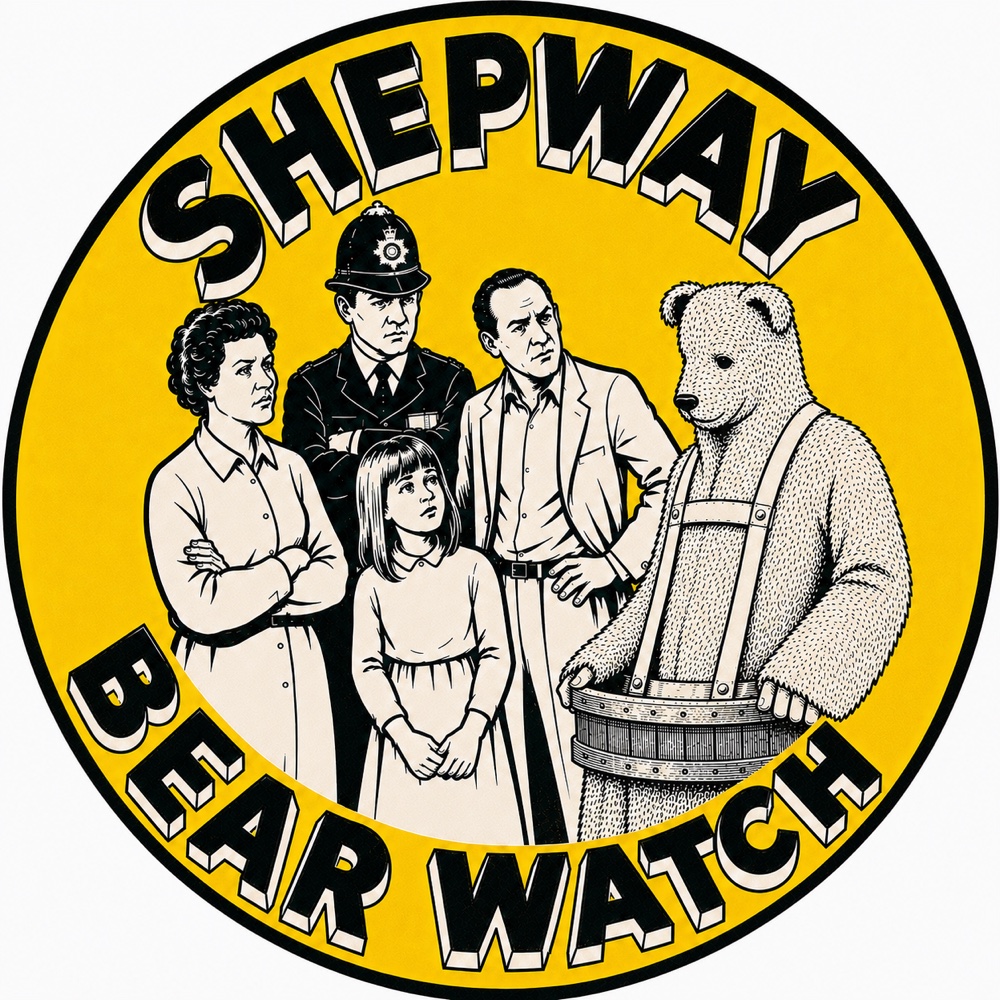
The Tiger Watch sign belongs to its own security system. It is placed here beside the later Shepway Bear Watch badge as a visual comparison only: two local watch signs, separate in authority and purpose, but unusually close in the archive’s language of perimeter, warning and return.
| File | Date | Status | Summary |
|---|---|---|---|
| SB-01 Christmas Escape | 25 Dec 1910 | DOCUMENTED | Regimental bear reported missing from Shorncliffe Camp. Search extended towards Folkestone and Hythe. |
| SB-02 Ginger Beer Recovery Procedure | Dec 1910 | REPORTED | Ginger beer offered during attempted recovery. The procedure was unsuccessful. |
| SB-03 Rough and Tumble | Dec 1910 | REPORTED | Several soldiers were involved in the final recapture. Later Bear accounts classify the incident as an early audience-participation exercise. |
| SB-07 Barrack Instruction | Date unknown | DISPUTED | The Bear states that singing, gaming and repeated choruses formed part of his original mascot training. |
| SB-09 Lock-Up Rehearsal | Date unknown | UNVERIFIED | Later Bear notes treat pencil-marked lock-up walls as informal instruction. No evidence has been located confirming an authorised performance venue. |
| SB-12 Transfer of Authority | Date unknown | INCOMPLETE | Military responsibility appears to end before civic responsibility begins. |
| SB-18 First Public-House Barring | Date unknown | LATER FILE | The Bear interpreted exclusion from the building as permission to perform immediately outside. |
| SB-23 Formation of Bear Watch | Date unknown | AUTHORITY UNCONFIRMED | Shared notices began appearing after responsibility for the Bear could no longer be assigned to a single institution. |
SHEPWAY BEAR WATCH |
PUB EXCLUSION REGISTER |
CCTV SPOTTED ANTICS
STREET GAMES / TONTINE STREET |
MARINE PARADE 1976 |
INTERNATIONAL FOLKLORE FILE
HOTEL BURSTIN |
DOME AND ROTUNDA |
HOODEN HORSE TRIALS
The Shorncliffe files do not establish a continuous line between Teddy and the later Folkestone Bear. They establish something less stable and perhaps more useful: a recurring local arrangement in which a mascot is adopted, encouraged, displayed, allowed to exceed its role and then subjected to increasingly complicated systems of recovery.
Military restraint became civic policing. Civic policing became public-house exclusion. Public-house exclusion became Bear Watch. The mascot survived by continuing to misunderstand the terms of its release.
Folkestone did not inherit the Bear. It inherited the problem of returning him.
